Ceiling Leak Water Damage in Valley Village, CA
An upstairs fixture or supply leak can soak a ceiling cavity before a drip appears. The restoration technician assesses overhead safety, follows the moisture path and coordinates access above and below.
(888) 578-6508 Assess the dripping ceiling safely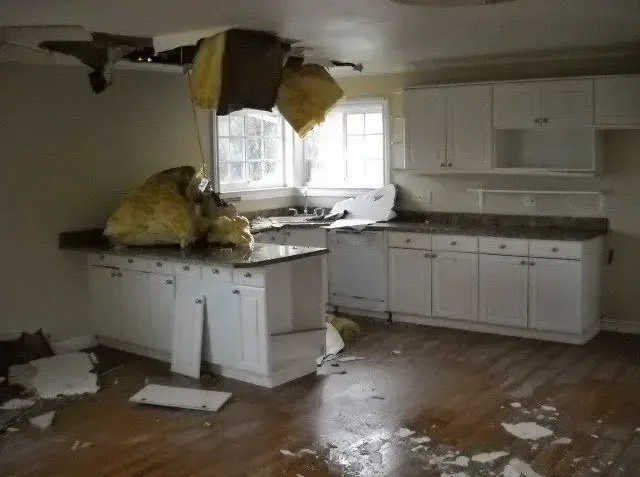
Ceiling leak water damage in Valley Village calls for a safe look above the stain before cosmetic repair begins. A plumbing connection, upstairs appliance or bathroom overflow can send water through framing and penetrations. The response team checks the ceiling's condition and nearby electrical fixtures, then maps the affected area from a safe position. A bulge or sag changes the access plan.
First steps for ceiling leak water damage
- Clear the room below. Residents keep people and pets away from bulging, sagging or crumbling ceiling finishes rather than placing a bucket directly beneath a hazard.
- Report the room above. An occupant tells the manager which upper room or fixture may be involved so authorized source access can begin.
- Avoid wet fixtures. The household leaves affected lights and switches untouched and requests electrical evaluation if the water path may involve wiring.
- Document from safety. The owner photographs the stain and notes whether dripping continues, without climbing under damaged board or opening the ceiling.
How ceiling leak water damage progresses
- 1
Assess overhead conditions
The technician checks deformation, electrical exposure and the room above, then plans a safe inspection route before approaching unstable ceiling materials.
- 2
Find the wet boundary
The crew maps adjoining bays and wall junctions, using source information and readings to determine whether water traveled farther than the visible stain.
- 3
Open and dry
The contractor removes unsafe or unsuitable layers, evaluates insulation and sets controlled drying for the retained joists and accessible cavity surfaces.
- 4
Review closure conditions
Repeat readings and the source repair record support the next step, with any remaining inaccessible moisture discussed before board, texture or paint returns.
Coordinating inspection between floors
The reported Colfax Avenue apartment pipe break damaged four stacked units. That incident is a concrete reason to check below an upstairs release, but it does not mean every ceiling leak involves several homes. The manager identifies access to the source room and affected lower spaces. Technicians record each location separately and distinguish current moisture from old, dry discoloration.
Apartments along Burbank Boulevard can require shared-building coordination, while a single-story home near Riverside Drive presents another inspection route. The contractor asks what occupies the space above the ceiling instead of assuming a bathroom, roof or attic sits there.
- Occupants stay outside areas with sagging board, falling material or water near lighting and electrical devices.
- The crew identifies the supply or drain source before treating a ceiling stain as a roof problem.
- Technicians check wall junctions and adjoining bays where framing can redirect moisture beyond the visible mark.
- Managers coordinate entry and protect unaffected units from dust, debris and unnecessary disruption during access work.
Choosing controlled ceiling access
A ceiling opening may be necessary to remove damaged board, release trapped moisture safely or reach wet insulation. The restoration contractor explains the purpose and boundaries of that opening. Materials exposed to contaminated drain water need a different removal decision from a promptly stopped clean supply leak. The source classification belongs in the written scope.
- Support and electrical concerns take priority over attempts to save a visibly damaged finish.
- Pre-removal photographs preserve the original stain and deformation for the owner and claim record.
- Retained framing needs actual measurements, not a conclusion based on the appearance of the replacement board.
- Drying equipment should address the open cavity without blowing debris into occupied rooms.
Keeping the ceiling open until the evidence supports closure
After source repair, the drying team tracks the exposed assembly and adjoining surfaces. A stain that stops growing can still sit below damp wood or insulation. The technician compares marked points and investigates readings that do not improve. The owner should know which materials remain in place and what supports that decision.
Finish repairs come after the source and retained materials meet the agreed conditions. The contractor separates painting, texture matching and reconstruction from emergency cleanup so the household can schedule the next phase with a clear scope.
Discuss the wet materials before repairs
A small ceiling stain may sit beneath a larger wet cavity. Describe any sagging, nearby lights and the space above before arranging inspection and controlled access.
(888) 578-6508 Discuss overhead water damageWhat does ceiling leak water damage cost in Valley Village, CA?
Ceiling leak cleanup and drying generally ranges from $900 to $4,200. Overhead access, wet insulation, contamination and more than one affected room increase the work. Source repair and finish matching are separate.
Localized stain and moisture
$900 to $1,600
- Source-path checks
- Focused measurement
- Limited drying
Open ceiling cavity
$1,600 to $2,800
- Safe access
- Insulation assessment
- Framing measurements
Several bays or rooms
$2,800 to $4,200
- Expanded moisture map
- Controlled removal
- Coordinated drying
The figures describe typical work scopes, not a quote. Water category, affected area, access and the time before drying change the scope. Compare the inputs in the Valley Village water damage cost calculator.
Documentation for your insurance claim
The restoration contractor records the water source, affected rooms and moisture readings before removal begins. Timestamped photographs show damaged materials and the reason for opening a wall or lifting a floor. Daily temperature, humidity and material readings document progress against a dry comparison area. An itemized scope separates extraction, disposal, cleaning and equipment use from plumbing repairs and finish replacement. The property owner keeps invoices and the initial discovery details with that record. An insurer evaluates coverage under the actual policy; a sudden plumbing release, outside flooding and a sewer backup can receive different treatment. The adjuster decides coverage, and the homeowner checks deductibles, exclusions and any applicable endorsements directly with the insurer.
Daily measurements support the IICRC S500 drying goal. The drying crew compares similar materials and investigates readings that stop improving before equipment leaves.
Ceiling leak water damage in Valley Village
Coverage includes homes and businesses around Laurel Canyon Boulevard, Colfax Avenue and Burbank Boulevard, with ZIP 91607 and 91617. The work scope follows the actual wet rooms and materials.
Additional service areas include Sherman Oaks, Studio City, North Hollywood, Encino and Hollywood.
Ceiling Leak Water Damage questions in Valley Village, CA
Is a ceiling leak always from the roof?
No. An upstairs supply, appliance, bathroom or drain can produce a similar stain. The technician asks what lies above the affected area and coordinates source investigation. Roof assessment is appropriate when the evidence indicates exterior entry, rather than merely because the ceiling is wet.
Can the ceiling collapse after dripping stops?
Wet finishes can remain weakened even after the source stops. A sagging or swollen area needs professional assessment before anyone works beneath it. The contractor evaluates safe removal and access; the household should not use the absence of dripping as proof of stability.
Why inspect the adjoining wall?
Water can follow framing, wall junctions and penetrations away from the initial opening. A dry-looking wall may conceal wet insulation or lower edges. The moisture map identifies the actual boundary and helps the crew avoid both missed damage and unnecessary removal.
Can the manager wait for every tenant to notice a stain?
Waiting for visible signs can miss moisture in lower assemblies. The manager should coordinate appropriate access after an upstairs release, especially when readings suggest travel between units. The contractor documents findings room by room instead of assuming either no spread or universal damage.
When can a painter cover the stain?
Painting belongs after source correction and assessment of retained materials. A stain can remain after drying, so the technician checks the ceiling cavity and records the moisture condition before a painter seals or covers it. The owner should obtain the drying record and confirm repair requirements before cosmetic finishing begins.
Does the cleanup price include new drywall?
Emergency mitigation and reconstruction may appear as separate scopes. The owner should ask whether the proposal covers removal, equipment, disposal and monitoring, then identify any board replacement, texture or paint work separately. That distinction makes competing proposals easier to compare.
A clear scope starts with the source
A small ceiling stain may sit beneath a larger wet cavity. Describe any sagging, nearby lights and the space above before arranging inspection and controlled access.
(888) 578-6508 Discuss overhead water damageCheck the cavity before repainting
The restoration technician traces ceiling moisture and documents retained materials before finishing work begins.
(888) 578-6508 Arrange a ceiling drying scope