Hardwood Floor Water Damage in Valley Village, CA
Water can change a wood floor before the surface looks badly damaged. The drying technician identifies the flooring assembly, compares affected and dry areas and evaluates whether controlled recovery is practical.
(888) 578-6508 Discuss the wet wood assembly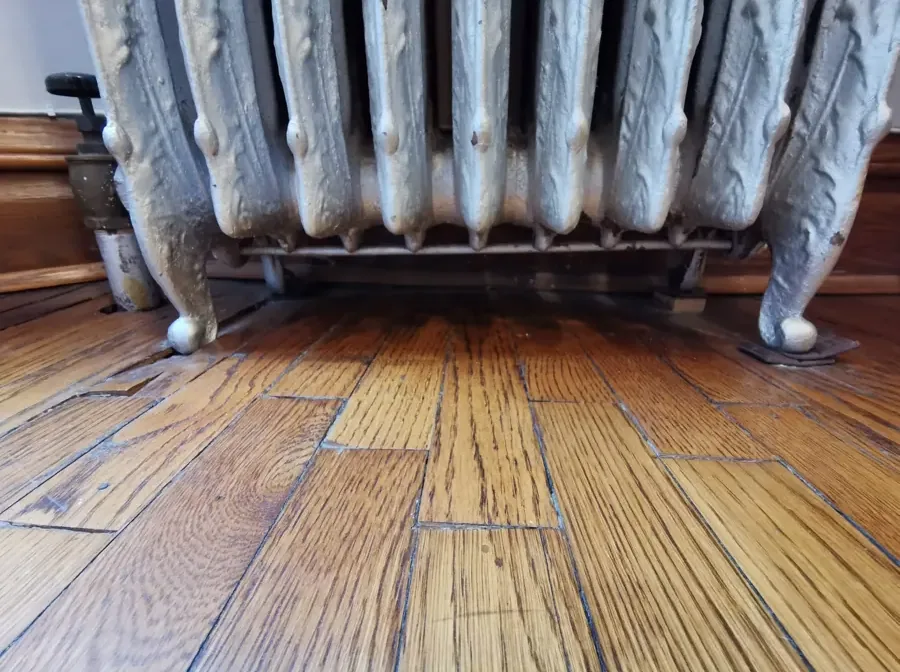
Hardwood floor water damage in Valley Village needs a material-specific inspection before sanding or replacement. Solid wood, engineered flooring and wood-look products respond differently to water. The restoration technician identifies the installed assembly and checks its moisture alongside a suitable dry reference. Cupping, gaps or a raised edge can signal a problem, but appearance alone does not determine recovery.
First steps for hardwood floor water damage
- Stop additional water. The owner isolates the source safely and arranges its repair before water continues feeding the floor assembly.
- Lift reachable dry items. The household removes accessible rugs and furnishings from the affected area when safe, avoiding heavy dragging across swollen boards.
- Avoid early sanding. The owner delays cosmetic leveling until the floor and substrate receive moisture assessment and a flooring professional reviews recovery.
- Share flooring details. Residents provide installation records or product information when available so the technician can distinguish solid, engineered and other floor materials.
How hardwood floor water damage progresses
- 1
Identify the assembly
The technician checks the flooring type, attachment and substrate, records the source category and selects comparison points before recommending recovery or removal.
- 2
Remove accessible water
The crew extracts surface moisture and evaluates edges or trapped layers, explaining where restricted access prevents a reliable assessment of the subfloor.
- 3
Dry with measurements
Controlled air movement and dehumidification support moisture reduction while repeated board and substrate readings reveal uneven progress or limits to recovery.
- 4
Coordinate floor repair
The contractor supplies drying records and observed damage to the flooring specialist, who evaluates stability, replacement needs and refinishing requirements before cosmetic work begins.
Checking the complete floor assembly
Local housing descriptions include Spanish and ranch-style homes. Each property needs its own flooring identification before anyone describes original boards or their condition. At a property near Riverside Drive, the crew verifies the finish, attachment method and substrate. A floor over concrete requires a different assessment from boards above a wood subfloor. Installation records can help the technician identify the flooring layers, while readings at accessible edges and the substrate show where moisture remains.
Apartments near Colfax Avenue may need lower-room access after an upstairs release. A reported pipe release reached four stacked units on Colfax Avenue, so the inspection should follow the water through each accessible level. The drying map follows the actual wet layers and adjoining walls.
- The technician checks board condition, seams and perimeter transitions before deciding where moisture measurements are meaningful.
- The crew identifies the source category because sewage or outside contamination changes material-retention decisions.
- Area rugs and furniture contact points receive attention when they restrict evaporation or conceal a wet patch.
- The contractor explains whether controlled drying can reach the substrate or whether flooring access is necessary.
Controlling moisture without rushing the finish
Wood can continue changing as moisture redistributes through the assembly. The drying team uses measured air conditions and suitable equipment rather than excessive heat as a shortcut. Surface drying may happen before the underside stabilizes. The owner should avoid sanding a distorted floor simply to make it look flat while moisture remains uneven.
- Repeat readings at consistent points distinguish genuine progress from variation between boards.
- The dry reference should match the material and help explain the target rather than serve as an arbitrary number.
- Damaged engineered layers or delamination may limit recovery even when the wood can lose moisture.
- A flooring professional evaluates repair and refinishing after the drying record supports a stable assembly.
Making a clear keep-or-replace decision
For homes around Burbank Boulevard, a written scope should state what is known about the flooring and what still needs access. The contractor records contamination, visible deformation and substrate readings where obtainable. That evidence helps the owner understand why one section may remain while another requires replacement.
Drying and refinishing are separate decisions. The restoration team documents the moisture trend, and the flooring specialist addresses installation tolerances, appearance and finish compatibility. A promise to save every board would ignore material condition and the water source.
Discuss the wet materials before repairs
Wet wood needs an assembly-level decision before cosmetic repair. Describe the flooring type, visible movement and water source so the inspection can address boards and the layer below.
(888) 578-6508 Review the wet flooring assemblyWhat does hardwood floor water damage cost in Valley Village, CA?
Hardwood floor water damage drying often ranges from $1,200 to $5,000. The floor type, substrate, affected area and contamination influence recovery. Sanding, refinishing and replacement flooring are separate repair costs.
Limited clean-water area
$1,200 to $2,000
- Floor identification
- Moisture comparison
- Focused drying
Several affected floor sections
$2,000 to $3,400
- Substrate checks
- Controlled access
- Repeat board readings
Dense or concealed moisture
$3,400 to $5,000
- Broader assessment
- Extended drying
- Specialist handoff records
The figures describe typical work scopes, not a quote. Water category, affected area, access and the time before drying change the scope. Compare the inputs in the Valley Village water damage cost calculator.
Documentation for your insurance claim
The restoration contractor records the water source, affected rooms and moisture readings before removal begins. Timestamped photographs show damaged materials and the reason for opening a wall or lifting a floor. Daily temperature, humidity and material readings document progress against a dry comparison area. An itemized scope separates extraction, disposal, cleaning and equipment use from plumbing repairs and finish replacement. The property owner keeps invoices and the initial discovery details with that record. An insurer evaluates coverage under the actual policy; a sudden plumbing release, outside flooding and a sewer backup can receive different treatment. The adjuster decides coverage, and the homeowner checks deductibles, exclusions and any applicable endorsements directly with the insurer.
Daily measurements support the IICRC S500 drying goal. The drying crew compares similar materials and investigates readings that stop improving before equipment leaves.
Hardwood floor water damage in Valley Village
Coverage includes homes and businesses around Laurel Canyon Boulevard, Colfax Avenue and Burbank Boulevard, with ZIP 91607 and 91617. The work scope follows the actual wet rooms and materials.
Additional service areas include Sherman Oaks, Studio City, North Hollywood, Encino and Hollywood.
Hardwood Floor Water Damage questions in Valley Village, CA
Can every cupped board be saved?
No recovery outcome should be promised before inspection. The technician considers wood type, contamination, deformation and substrate access. Some floors can improve with controlled drying, while delamination or other damage may require replacement. The flooring professional evaluates the final repair options after moisture conditions stabilize.
Why not sand the high edges immediately?
Uneven moisture can continue changing the board shape. Sanding before the assembly stabilizes may remove material unnecessarily and complicate the eventual finish. The owner should obtain a drying assessment and flooring advice before treating the visible distortion as a purely cosmetic defect.
Does a dry board surface mean the subfloor is dry?
The underside and substrate can retain moisture after the top improves. The technician checks accessible layers and explains any limitation. Readiness for refinishing or replacement depends on the assembly, especially when an impermeable layer restricts evaporation below the boards.
Are engineered floors assessed differently?
Engineered products contain layers and adhesives whose condition affects recovery. The contractor identifies the actual product and checks for separation or swelling. Moisture reduction alone cannot reverse every form of damage, so the keep-or-replace decision considers both readings and physical condition.
Can heat speed up the process safely?
Equipment selection should follow the material and drying environment rather than an uncontrolled heat increase. The drying team monitors conditions and the moisture trend. Excessive or uneven treatment can complicate a floor already changing shape, so residents should not improvise with heaters.
Who decides when refinishing can begin?
The restoration contractor documents drying progress, and the flooring specialist evaluates stability and product requirements for repair. The owner should coordinate that handoff rather than relying only on appearance. The written scope should separate moisture recovery from sanding, finish matching and replacement materials.
A clear scope starts with the source
Wet wood needs an assembly-level decision before cosmetic repair. Describe the flooring type, visible movement and water source so the inspection can address boards and the layer below.
(888) 578-6508 Review the wet flooring assemblyMeasure the floor before sanding or replacement
The drying team tracks wood and substrate conditions and explains recovery limits before finish work starts.
(888) 578-6508 Arrange wood-floor moisture assessment