Water Damage Restoration in North Hollywood
A spreading puddle and a damp wall need different responses. North Hollywood property owners can arrange water removal, trace affected materials and plan drying around the source of the loss.
(888) 578-6508 Discuss a wet room todayCleanup planning accounts for the water source, affected surfaces and safe access throughout the property.
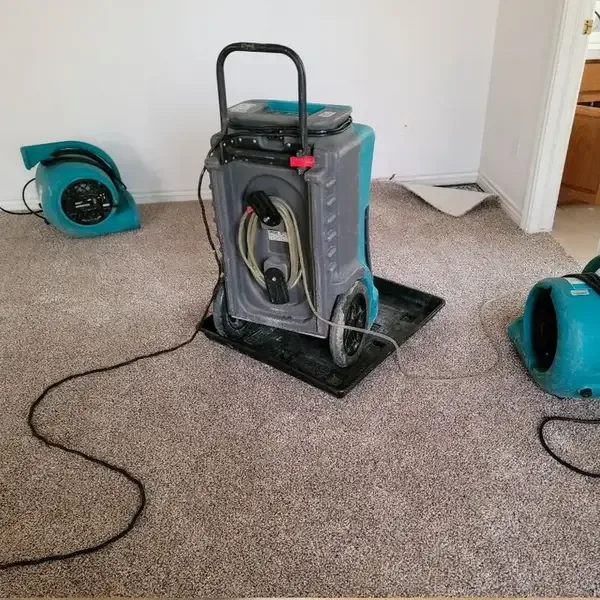
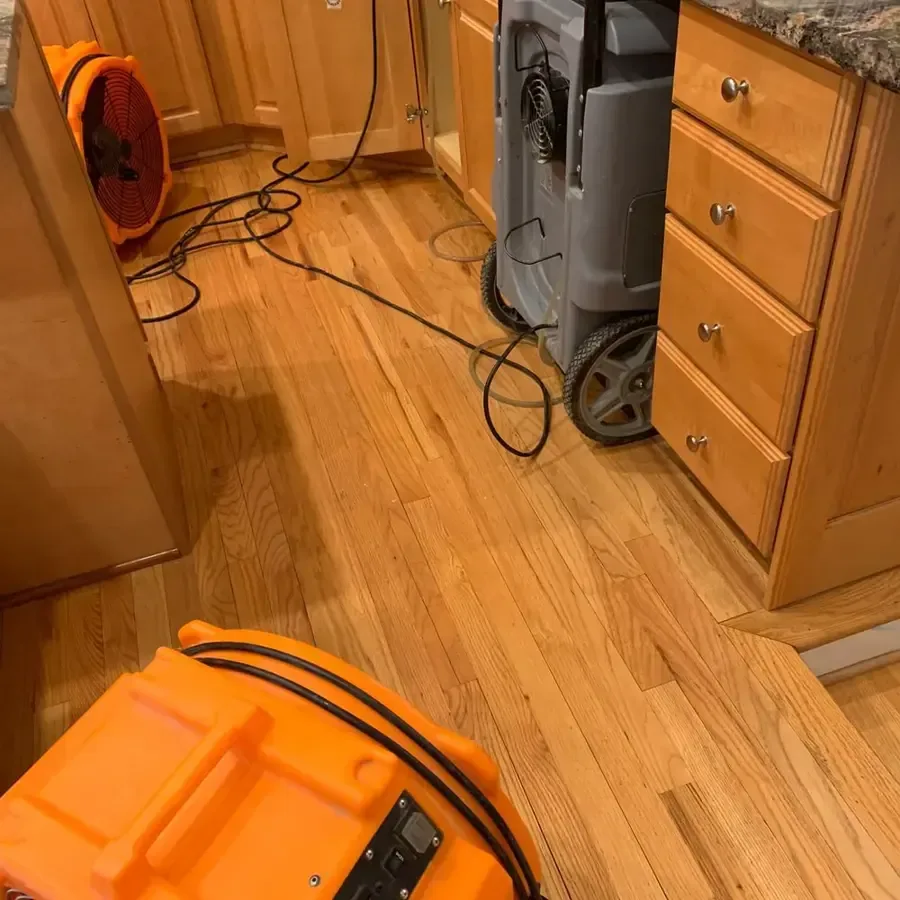
Decisions tied to the affected materials
A useful cleanup scope explains which materials are wet, how they will be reached and what happens after extraction. That clarity helps owners coordinate repairs while keeping a record of the property's condition.
Protect access and document what changed
- Avoid wet electrics. People should stay away from outlets, appliances and electrical panels reached by water or dripping ceilings.
- Stop safe sources. An accessible fixture valve can limit further release when reaching it requires no contact with water.
- Separate belongings. Dry possessions should remain outside the affected area while wet items are photographed before being moved.
- Record the route. Photos should show the apparent source, spreading water and damaged finishes without entering an unsafe room.
- Describe the problem. The initial cleanup conversation should identify the affected spaces, ongoing leakage and any visible wastewater.
Cleanup that follows the water through the building
The starting point may be an appliance, a roof opening or an overflowing fixture. Each service addresses a different route through finishes and concealed spaces.
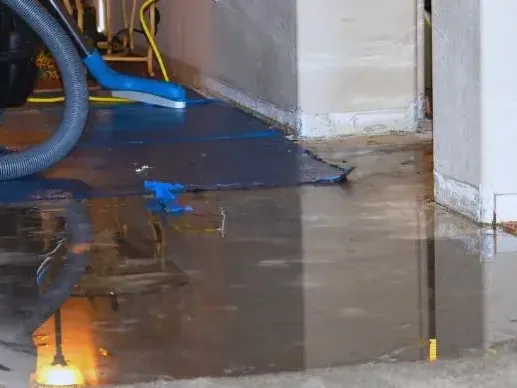
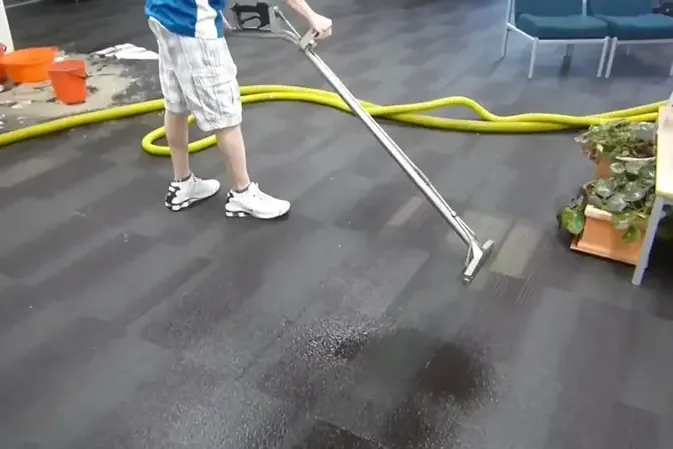 Water ExtractionStanding water needs removal before the floor beneath it can be assessed for retained moisture and damage.See water removal steps
 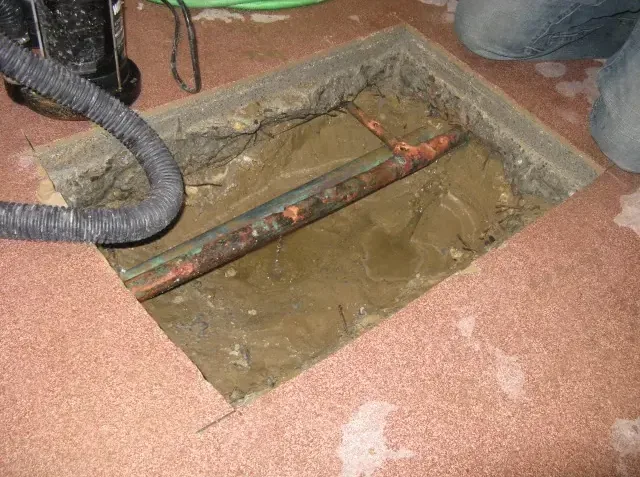 Slab Leak Water DamageA damp floor over concrete calls for leak isolation and careful checks beneath the visible floor finish.Plan drying below the floor
 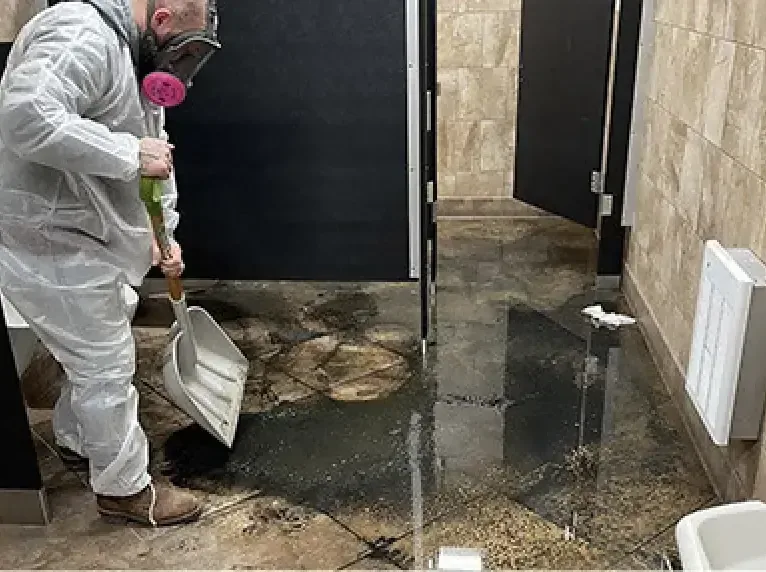 Sewage Backup CleanupWastewater changes the cleanup sequence, with restricted access and decisions about contaminated porous materials taking priority.Review sewage cleanup
  Burst Pipe Water DamageA split supply pipe can wet adjoining rooms, so inspection follows spray paths and hidden wall openings.Trace a pipe release
 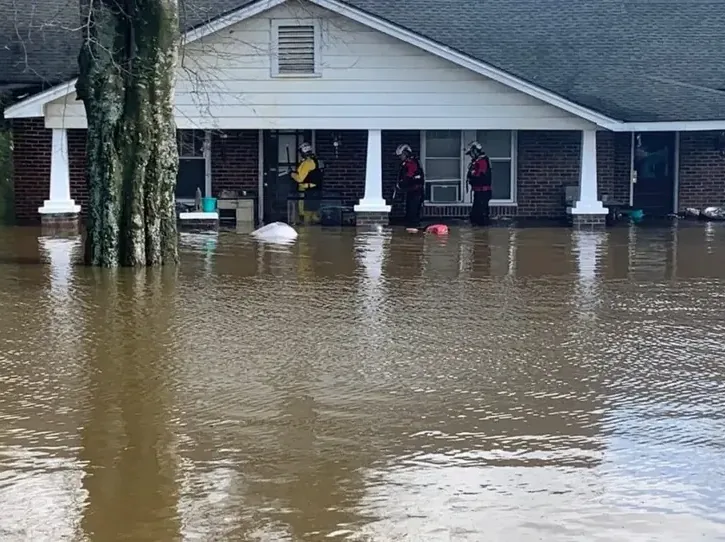 Storm Flood CleanupOutside water brings sediment indoors; removal and cleaning prepare affected spaces for a measured drying plan.Assess floodwater damage
 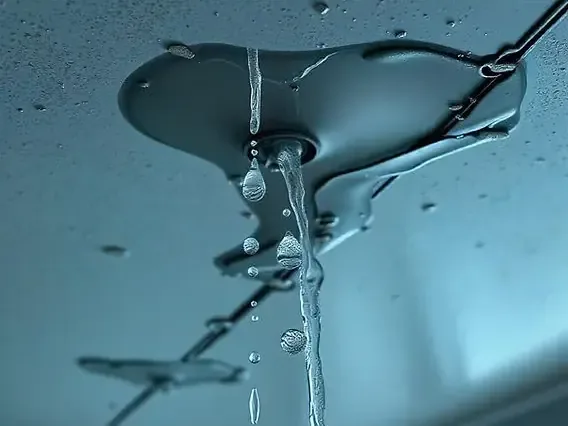 Roof Leak Water DamageRain entering overhead can travel along framing before showing as a stain somewhere below the roof opening.Check rain entry and drying
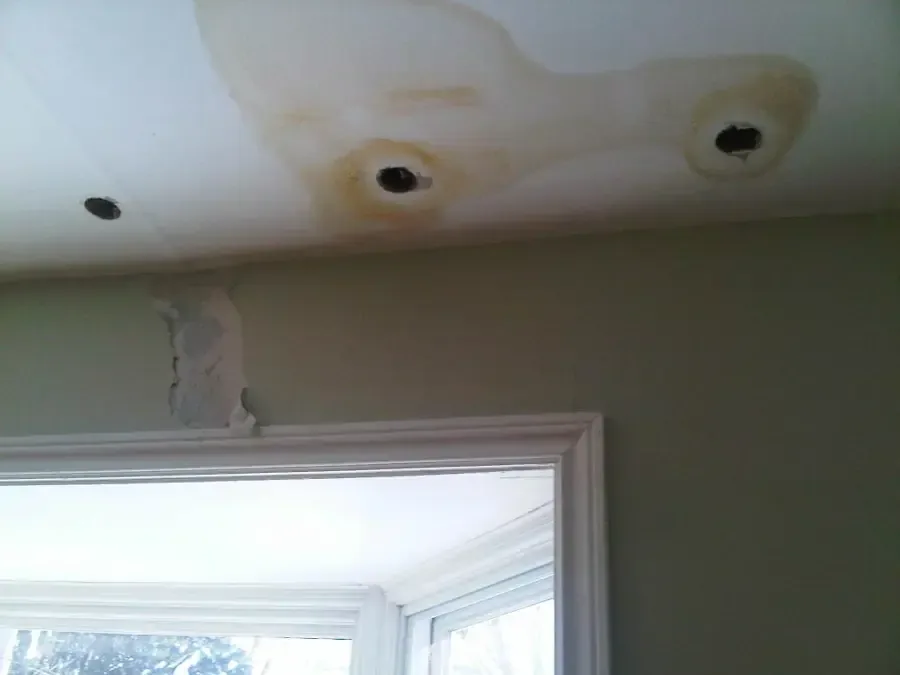
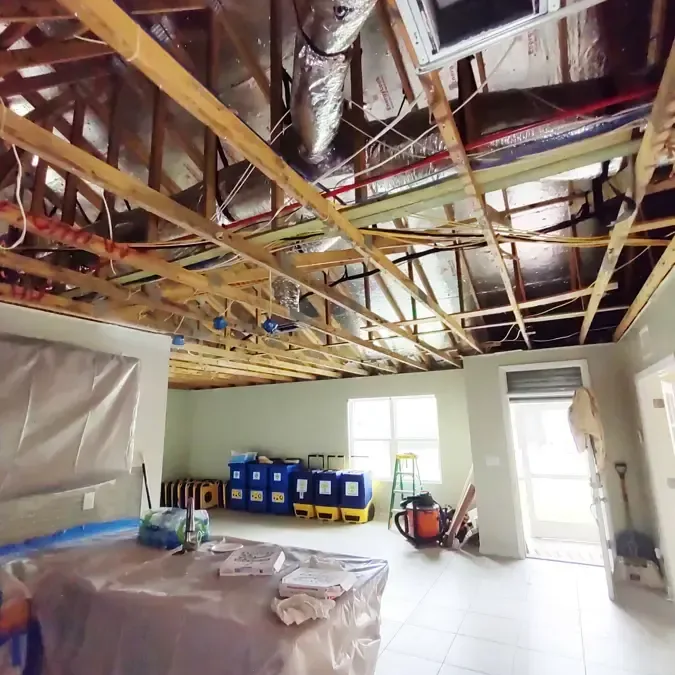
 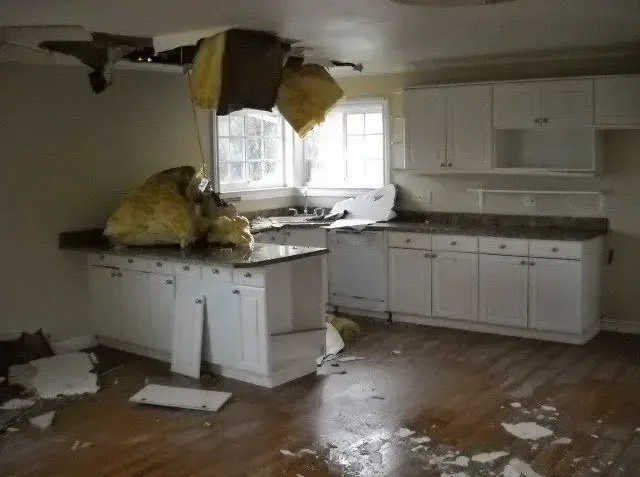 Ceiling Leak Water DamageA ceiling stain deserves attention above the paint, including insulation, framing and the source of repeated wetting.Inspect overhead moisture
 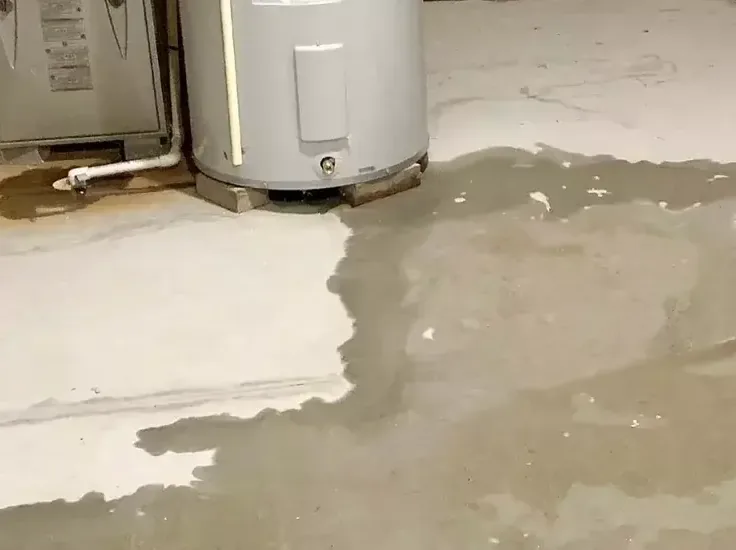 Water Heater Leak CleanupEscaped tank water may collect behind an enclosure, under flooring or inside nearby wall bases before discovery.Follow a tank spill
 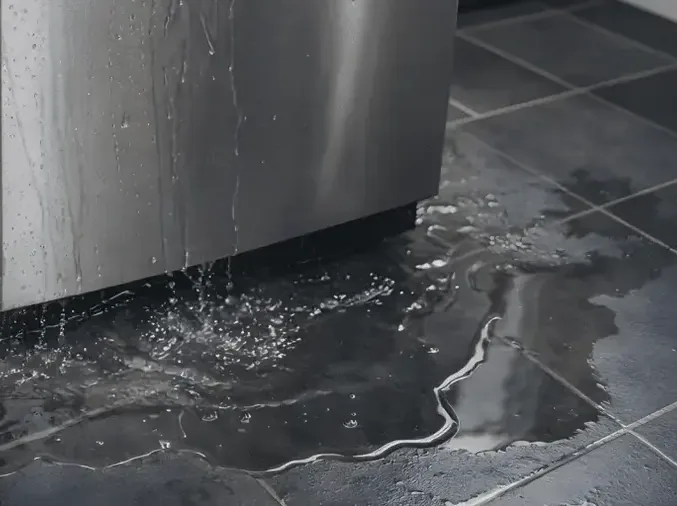 Appliance Leak Water DamageDishwasher and laundry spills require attention to cabinet edges and floor layers hidden beneath the appliance itself.Find hidden appliance water
 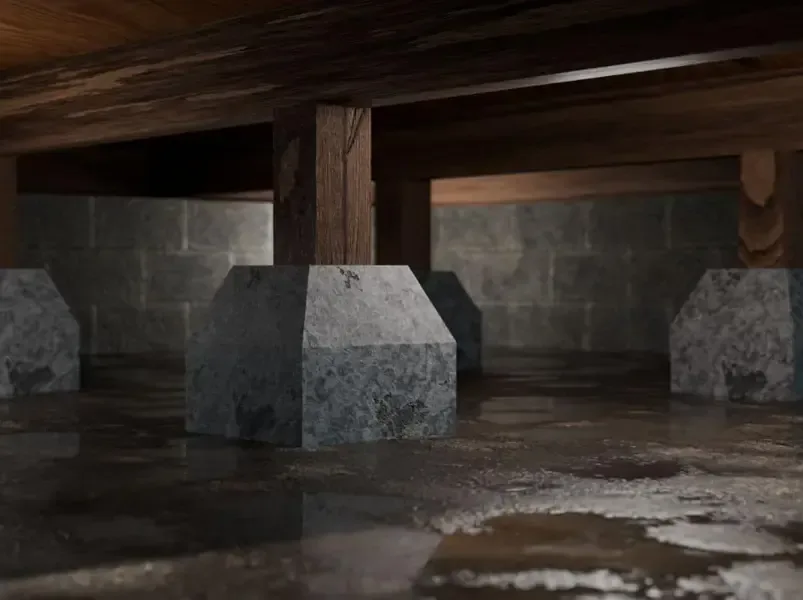 Crawl Space Water RemovalWater beneath an accessible raised floor needs a removal route and checks of joists, insulation and supports.Plan underfloor water removal
 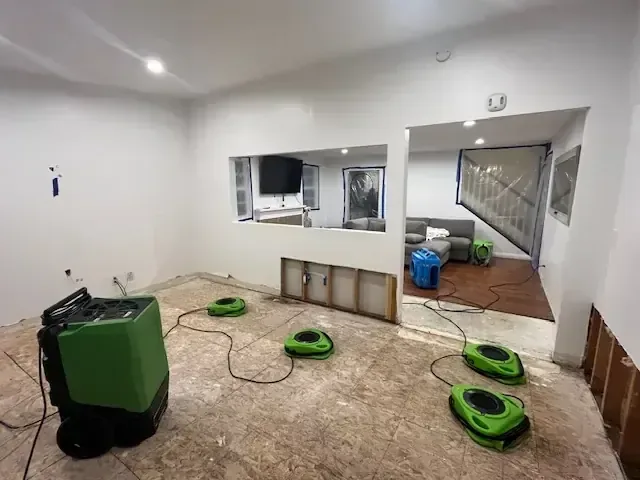 Structural DryingDrying decisions depend on material readings and moisture movement through assemblies, with equipment adjusted as conditions change.Understand the drying goal
 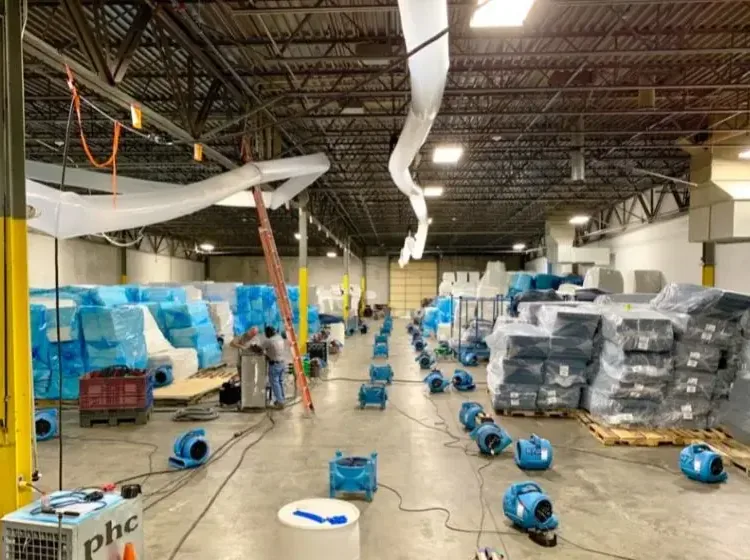 Commercial Water DamageBusiness cleanup must account for stock, equipment, tenant access and the parts of the premises affected by water.Coordinate business recovery
 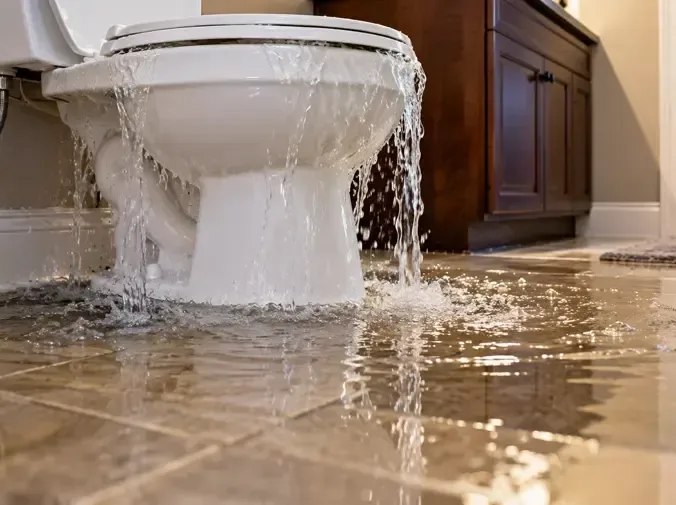 Toilet Overflow CleanupThe overflow source determines handling, from a clean supply spill to water carrying waste across bathroom surfaces.Compare overflow sources
 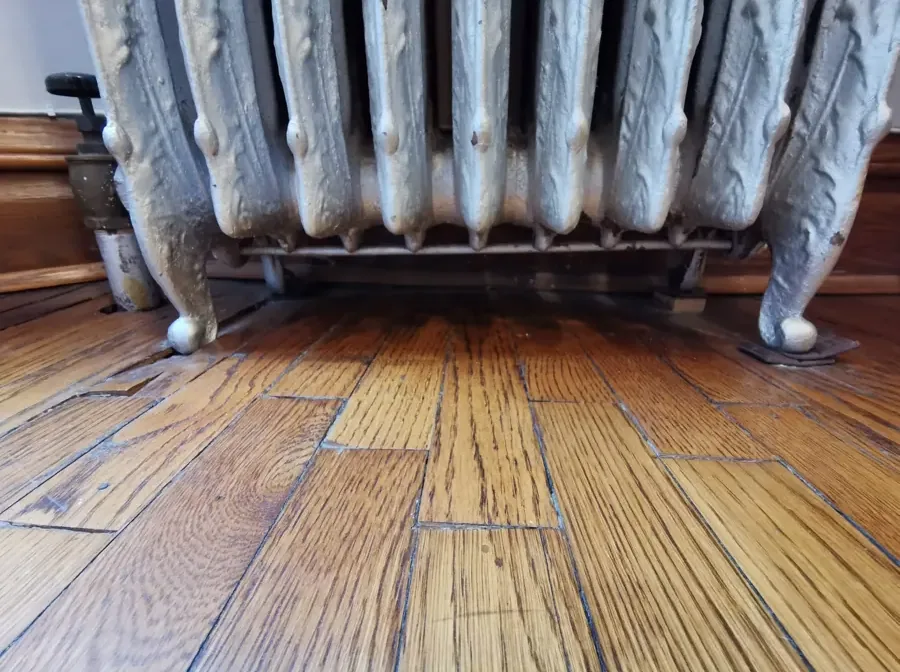 Hardwood Floor Water DamageWet boards need assessment alongside the subfloor, allowing recovery decisions to reflect the entire affected floor assembly.Review wood floor recovery
 Why North Hollywood homeowners call for water damage help
Defined boundaries
The assessment follows moisture beyond the visible puddle so connected cavities and floor edges receive attention before repairs begin.
Purposeful equipment placement
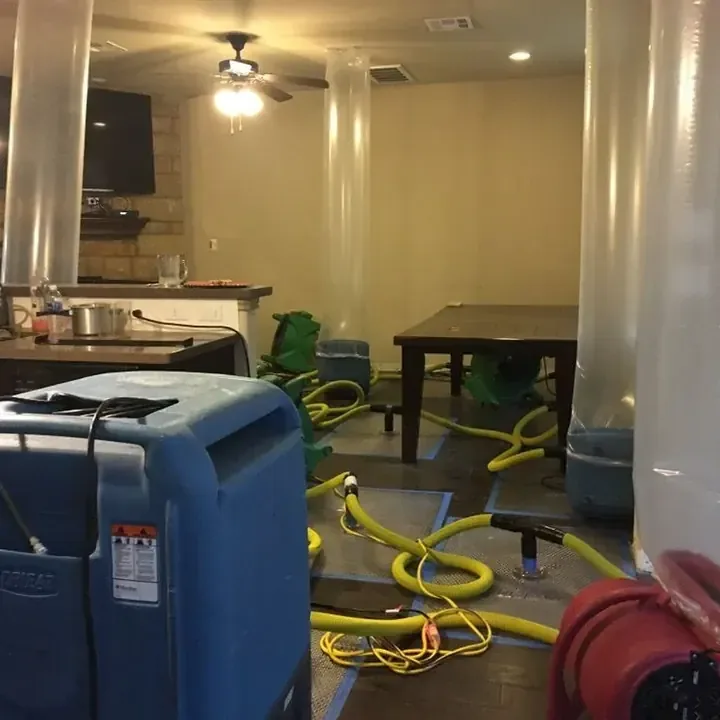
Airflow and moisture removal should suit the actual room and material access, with changes explained during the drying work.
Written observations
Photographs, material readings and removal notes keep the cleanup decisions understandable for the owner and any repair contractor involved.
Repair readiness
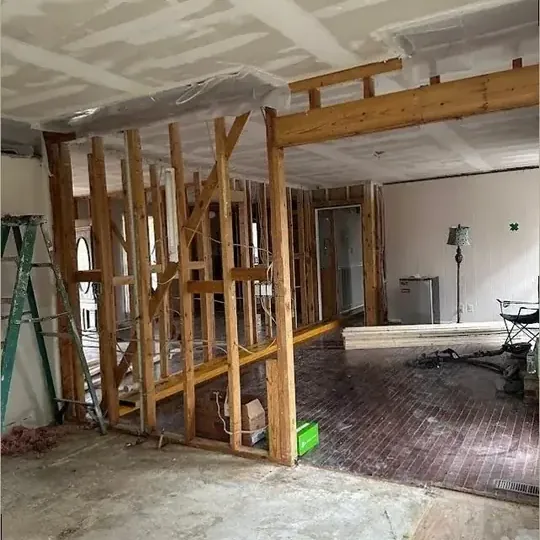
Closing a wall or replacing a finish depends on the condition beneath it, including moisture that remains out of sight.
A sequence built around moisture movement
Removal is an early stage, not the finish. The drying plan follows the water into materials and uses repeated observations to decide when surfaces can be prepared for repair.
- 1
Map the loss boundary
The inspection connects visible damage with adjacent surfaces and concealed spaces, identifying access restrictions before equipment or removal work begins inside the affected room.
- 2
Reduce the water load
Extraction removes accessible liquid while material decisions address saturated layers that obstruct cleaning, hide trapped moisture or prevent useful airflow through the assembly.
- 3
Manage the indoor conditions
Equipment placement accounts for wet surfaces, room separation and humidity, with continued checks showing whether the selected arrangement is moving moisture effectively.
- 4
Document the closing condition
Final notes identify remaining repairs and record material conditions so new finishes are planned around a dry assembly rather than a dry appearance.
The source shapes the handling plan
Supply water release
A fresh supply spill starts with isolation, extraction and checks for water beneath apparently intact finishes.
Explore removal workAppliance discharge
Water from a used appliance may carry residue, requiring cleaning choices that account for the discharge source.
Assess appliance spreadSewage inside
Wastewater requires a controlled work area and an assessment of porous materials that cannot remain in place.
See wastewater handlingWhat affects water damage costs in North Hollywood?
Cleanup costs depend on the water's reach, contamination and access to wet materials. A written assessment separates removal, drying and repair needs so the property owner can understand the proposed work before authorizing it.
Limited wet area
$1,000 to $2,000
- Accessible floor water
- Small material footprint
- Straightforward equipment placement
Several connected spaces
$2,000 to $4,500
- Adjoining rooms affected
- Concealed edges checked
- Broader drying setup
Extensive material involvement
$4,500 to $7,500
- Complex cavity access
- Contamination handling needs
- Multiple assemblies assessed
These planning ranges describe different cleanup scales. The actual scope depends on inspection findings, and plumbing repairs, replacement finishes or other reconstruction should be identified separately in the written estimate.
Records for the claim conversation
The insurer decides coverage under the policy. Clear photographs and an itemized cleanup record help explain what happened, which areas were affected and which actions limited additional damage at the property.
- Photograph the source and visible water path
- Retain cleanup estimates with the described scope
- List belongings moved out of wet areas
- Keep receipts for authorized emergency mitigation work
- Save moisture notes alongside dated progress photographs
When paying directly
An owner funding the work directly can request a scope organized by removal, cleaning and drying, then ask which repair activities fall outside that estimate.
Changes should be explained when concealed damage becomes accessible. Written approval keeps the additional work understandable before materials are removed or the equipment arrangement expands into adjoining spaces.
North Hollywood cleanup conversations
Recognizable roads and local areas
Postal areas
Other community pages
Describe the property and the affected rooms
North Hollywood is a community in the San Fernando Valley region of Los Angeles County. West Toluca Lake is included in its Mapping L.A. neighborhood definition.
Postal names extend across neighborhood boundaries. The cleanup conversation should confirm the property location, entry arrangements and water conditions, including any access limitations caused by the current loss.
North Hollywood, CA · [email protected]
Explore the full service selection(888) 578-6508 Discuss access for the assessmentWater removal and the surfaces that need attention
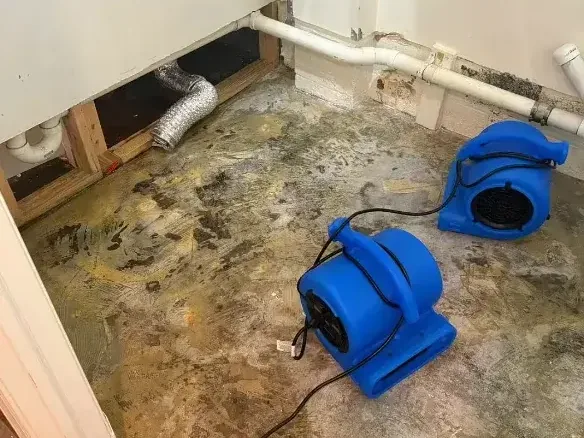
Street flooding and indoor water paths
Storm conditions can complicate access while an indoor leak follows its own path through a building. Local landmarks help describe the location; room conditions determine how cleanup proceeds inside the affected property.
February 24, 2023: FOX 11 reported severe flooding that closed Vineland Avenue between Vanowen Street and Sherman Way, a specific example of storm disruption in North Hollywood.
Outside water entry
Water crossing a doorway can carry debris into floor edges and adjoining rooms. Cleanup includes inspection beneath movable contents and accessible finishes after standing water removal.
Concealed indoor leaks
Water escaping behind a fixture may travel through a cabinet base before appearing in the open room. The source and hidden route both need attention.
Overhead moisture
A ceiling stain can reflect water traveling along framing. The inspection should follow that route while keeping people away from weakened or sagging ceiling sections.
Shared access arrangements
Where spaces share an entry or corridor, the cleanup plan should preserve a safe passage and identify who can authorize access to the affected rooms.
Community landmarks
Valley Plaza Park extends from Sherman Way toward Victory Boulevard. Victory-Vineland Recreation Center is another useful location reference when describing the property area during a cleanup conversation.
Questions before arranging cleanup
What information helps during the initial conversation?
The useful details are where water first appeared, whether it is still entering and which rooms are affected. Notes about electrical hazards, a sagging ceiling or wastewater help plan a safe approach. Photographs can support the description when taken from a dry location.
Does a dry surface mean cleanup is finished?
A surface can look dry while backing, insulation or a subfloor remains damp. Completion depends on the materials reached by water and their measured condition. Repair planning should account for concealed layers so replacement finishes are installed over a suitable assembly.
Should wet belongings stay where they are?
Items can be photographed before movement if the area is safe to enter. Dry belongings should be kept clear of the cleanup zone. Saturated or contaminated contents need separate handling decisions, especially when moving them would spread water into rooms that remain unaffected.
Can the plumbing repair and drying happen separately?
The leak source needs correction to prevent continuing wetting. Cleanup then addresses the water already inside the structure. The plumber and drying contractor may have different scopes, so the written estimate should identify who handles source repair, material access and restoration of finishes.
Is every water spill handled the same way?
The source changes the plan. A fresh supply leak differs from drain discharge or water entering from outside. The assessment considers contact with materials, debris and contamination before selecting extraction methods, cleaning steps and the porous materials that can remain in place.
What does the written drying record contain?
It can include the affected material locations, photographs, moisture observations and equipment changes during the work. The final record should explain the condition at completion and identify repairs still needed. Clear documentation helps the owner coordinate the transition from cleanup to rebuilding.
Do postal codes identify the whole service location?
North Hollywood postal naming extends beyond neighborhood boundaries, and some ZIP listings include other community names. An assessment request should identify the actual property and access arrangements. The postal code helps organize the request, while the location details pinpoint where the affected space is.
What if water came through a ceiling?
The area below a sagging or damaged ceiling should remain clear. Investigation follows the water above the visible stain and checks the room below for secondary wetting. Ceiling material, insulation and framing may need different drying or removal decisions before the opening can be repaired.
Explain where the water appeared
The first conversation can focus on the source, affected rooms and safe entry so the assessment starts with the relevant property details.
(888) 578-6508 Describe the water problemArrange the next step for a wet property
A clear description of the affected rooms helps the technician plan source control and material recovery.
(888) 578-6508 Discuss the affected property now