North Hollywood Ceiling Leak Water Damage
The shape of a ceiling stain rarely explains the whole loss. North Hollywood ceiling cleanup starts with safe access below the damage, then investigates the moisture route and materials above the visible finish.
(888) 578-6508 Discuss the damaged ceiling area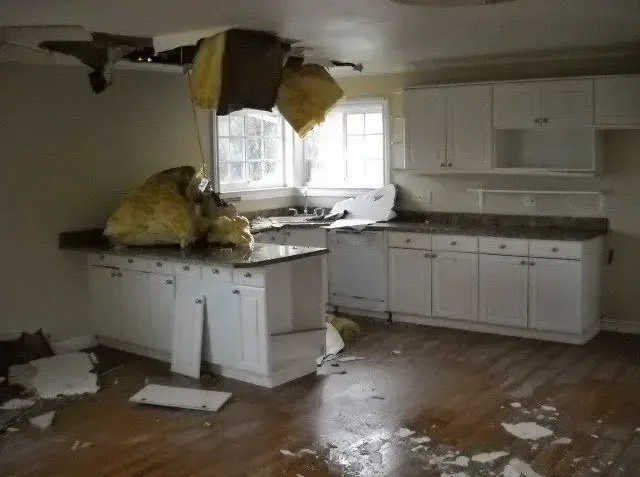
A ceiling can look mostly intact while water collects above it. Changes in shape, softness or continued dripping deserve attention before anyone moves belongings beneath the damaged area. For a North Hollywood property, the assessment should connect the visible ceiling condition with the source above and the surfaces below that have received falling water or debris.
First steps for ceiling leak water damage
- Avoid the area below. People and pets should remain clear of sagging ceiling material, falling debris and fixtures reached by water until safe access has been arranged.
- Describe shape and dripping. The assessment request should explain whether the ceiling is bowed, stained or actively dripping, and whether the appearance changed after the source was isolated.
- Protect dry belongings remotely. Unchanged items outside the affected zone can be moved through a dry route, while possessions beneath weakened material should remain untouched pending assessment.
- Identify access above. Information about the space over the ceiling and any available entry helps coordinate source investigation without unnecessary disturbance of the room below.
How ceiling leak water damage progresses
- 1
Assess overhead stability and spread
Inspection begins with safe access and the ceiling condition, then connects visible damage with accessible layers above the affected area.
- 2
Coordinate source and material access
The proposed scope separates source correction from ceiling opening, explaining which materials need removal to expose retained surfaces or eliminate saturated layers obstructing useful drying.
- 3
Dry the retained overhead assembly
Equipment supports moisture release from accessible materials while repeated checks track the ceiling cavity and any adjacent surfaces reached by the same water path.
- 4
Record the closure requirements
Documentation identifies the retained condition, removed finishes and remaining source or reconstruction work so the next contractor can plan ceiling repairs around the completed cleanup.
Start with the condition of the overhead finish
A sagging section needs a different access plan from a small stable stain. Occupants should remain outside the area beneath weakened material, and the cleanup scope should determine whether controlled removal is needed before inspection proceeds. Piercing or pulling at a wet ceiling can release water and debris without addressing the conditions hidden above it.
- Light fittings and nearby electrical components require caution when ceiling water has reached or passed through their openings.
- Wet insulation may conceal the extent of moisture and keep adjacent ceiling material damp after the visible dripping pauses.
- The room below should be checked for secondary wetting on floor edges, furniture surfaces and any stored belongings.
- A source above another occupied space may require access coordination before the investigation can connect the full water path.
Follow the route through accessible overhead layers
Vineland Avenue and Victory Boulevard offer useful references when arranging access in the community. Within the property, the room arrangement is the more important detail: what lies above the stain, which spaces can be entered and where the suspected source is located. These observations help determine whether plumbing, roofing or another source specialist needs to be involved.
Opening the finish can reveal moisture outside the original visible patch. The technician should explain any proposed expansion and document why an additional section needs access. A narrow repair opening may reach the source while leaving wet insulation elsewhere, so source correction and ceiling drying should each have a clearly described scope.
Rebuild around the condition behind the paint
Retained framing and other accessible layers need checks before replacement ceiling material encloses them. The drying arrangement should support those surfaces while preserving a safe route through the property. Structural drying provides context for that phase, especially where overhead moisture connects with a nearby wall cavity or a room on another level.
The closing record should show the original damage, the exposed layers and the condition reached before repair work begins. It should also identify any remaining source correction. That information helps the owner coordinate replacement insulation, ceiling closure and decoration in a useful order instead of treating the stain as the entire job.
Discuss the wet materials before repairs
A changing ceiling surface calls for attention above and below the stain. Describe visible sagging, dripping and the space overhead so an assessment can plan safe access and the next cleanup steps.
(888) 578-6508 Assess the ceiling conditionWhat does ceiling leak water damage cost in North Hollywood, CA?
North Hollywood ceiling cleanup pricing follows the affected overhead area, access requirements and wet layers. The estimate should distinguish source correction from ceiling removal, retained material drying and the finish repairs needed afterward.
Localized stain and moisture
$900 to $1,600
- Small affected section
- Accessible inspection
- Focused drying
Open ceiling cavity
$1,600 to $2,800
- Insulation involvement
- Framing checks
- Controlled access
Several bays or rooms
$2,800 to $4,200
- Connected overhead spread
- Broader removal
- Additional equipment
The figures describe typical work scopes, not a quote. Water category, affected area, access and the time before drying change the scope. Compare the inputs in the water damage cost calculator.
Documentation for your insurance claim
The restoration contractor records the water source, affected rooms and moisture readings before removal begins. Timestamped photographs show damaged materials and the reason for opening a wall or lifting a floor. Daily temperature, humidity and material readings document progress against a dry comparison area. An itemized scope separates extraction, disposal, cleaning and equipment use from plumbing repairs and finish replacement. The property owner keeps invoices and the initial discovery details with that record. An insurer evaluates coverage under the actual policy; a sudden plumbing release, outside flooding and a sewer backup can receive different treatment. The adjuster decides coverage, and the homeowner checks deductibles, exclusions and any applicable endorsements directly with the insurer.
Daily measurements support the IICRC S500 drying goal. The drying crew compares similar materials and investigates readings that stop improving before equipment leaves.
Ceiling leak water damage in North Hollywood
The initial conversation should identify the affected ceiling and whether anything is sagging or falling. Access details near Laurel Canyon Boulevard help locate the property and plan entry around the damaged room.
The same service nearby: ceiling leak water damage in Valley Village, Studio City, Sherman Oaks.
All water damage services in North Hollywood · View all service areas
Ceiling Leak Water Damage questions in North Hollywood, CA
Should a water filled ceiling bubble be punctured?
Occupants should keep away from softened or sagging material instead of opening it themselves. Releasing trapped water can bring down debris and expose other hazards. The assessment should include a controlled access plan that accounts for the ceiling condition and the space beneath it.
Can a small stain hide a larger wet area?
Water can travel above the finish before emerging at a joint or low point. The visible mark may therefore be smaller than the affected insulation or framing area. Inspection of accessible layers helps locate where moisture remains and which portions need opening or drying.
Why inspect the floor under a ceiling leak?
Drips can soak floor coverings, furniture and wall bases while attention remains on the overhead damage. Those surfaces become part of the same water loss. Checking them early helps avoid finishing the ceiling work while moisture remains trapped in the floor assembly underneath it.
Does ceiling cleanup include fixing the leak source?
The written proposal should state who handles source investigation and repair. Plumbing or roof work may be separate from interior cleanup. Both need coordination, because the ceiling should not be closed while continuing entry can wet the replacement material or the retained framing again.
Can the room remain occupied during the work?
Access depends on the ceiling condition, removal work and equipment layout. The assessment should identify any area that must remain clear and any safe passage that can be preserved. Occupancy decisions should follow those conditions rather than the size of the visible stain alone.
What determines when a new ceiling can be installed?
The retained assembly needs suitable material conditions and a corrected source before it is enclosed. Moisture observations and photographs provide a record for the repair stage. Replacement insulation, ceiling material and decoration should follow that handoff, with any unresolved source work clearly identified for the owner.
A clear scope starts with the source
A changing ceiling surface calls for attention above and below the stain. Describe visible sagging, dripping and the space overhead so an assessment can plan safe access and the next cleanup steps.
(888) 578-6508 Assess the ceiling conditionFollow the water above the finish
The scope connects source correction, material exposure and drying before replacement ceiling work begins in the room.
(888) 578-6508 Discuss overhead water damage