Slab Leak Water Damage in Valley Village, CA
A hidden supply leak can wet concrete, flooring and wall edges before a puddle appears. The restoration team maps the damage while a plumber identifies and repairs the source.
(888) 578-6508 Discuss moisture below flooring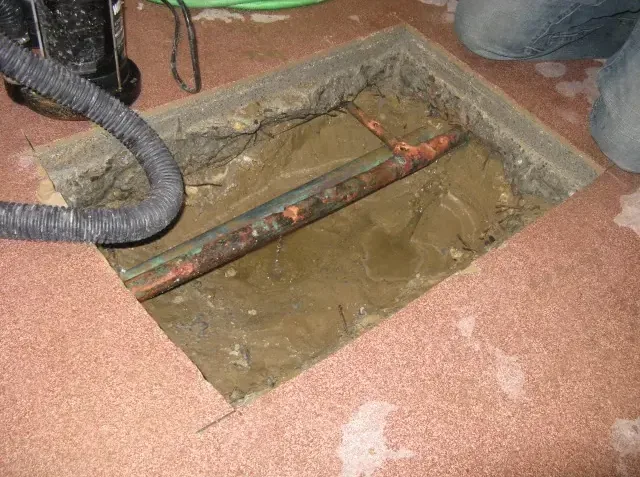
A damp floor in Valley Village calls for source investigation before anyone assumes an under-slab pipe failure. Appliance hoses, a wall supply and outside water can produce similar symptoms. The restoration technician measures the affected area and asks a plumber to confirm the source before the owner authorizes invasive access. Source repair and structural drying solve different parts of the problem.
First steps for slab leak water damage
- Limit further water. The owner closes the relevant supply only if the valve is known and safely accessible, then arranges plumbing diagnosis.
- Avoid exploratory demolition. Residents keep tools away from the floor until a professional locates the source and identifies utilities beneath the proposed opening.
- Identify sensitive belongings. The household moves dry, reachable possessions away from wet edges without walking across damaged or electrically unsafe flooring.
- Preserve the discovery record. The property owner notes meter changes, warm areas and the first visible dampness, keeping those observations separate from a confirmed diagnosis.
How slab leak water damage progresses
- 1
Confirm the source
A plumber checks the suspected supply while the restoration technician measures floor and wall moisture, preventing an assumed slab leak from directing unnecessary demolition.
- 2
Open only necessary layers
The contractor evaluates the floor covering and substrate, explains recovery limits and plans safe access around cabinetry, utilities and adjoining dry finishes.
- 3
Manage concrete moisture
The drying crew adjusts air movement and dehumidification to the exposed assembly, tracking conditions that would otherwise slow moisture release from dense layers.
- 4
Document readiness
The technician records progress and the remaining moisture limits, while the flooring contractor verifies product requirements before a replacement floor covers the concrete.
Separating a hidden leak from surface water
The neighborhood includes single-story houses as well as apartments along its boulevards. A property near Colfax Avenue therefore needs its actual floor assembly identified before anyone assumes the concrete lies directly beneath the finish. The technician asks about rooms above, recent fixture use and moisture at adjacent walls. A warm patch or an unexpected water bill may justify investigation but does not locate a broken pipe on its own.
Laurel Canyon Boulevard has a documented public-main flooding event near La Maida Street. That incident should not be confused with an underfloor leak inside a house. The inspection distinguishes an active indoor supply loss from moisture that entered across a threshold or traveled from another room.
- The owner arranges plumbing isolation and leak detection rather than authorizing random cuts through the floor.
- The restoration crew records the wet footprint around cabinets, partitions and flooring transitions before opening materials.
- Technicians identify adhesives, underlayment and finish layers that could prevent moisture from escaping upward.
- The contractor discusses material testing when an older assembly requires disturbance, rather than assuming every layer is safe to cut.
Drying the assembly after the pipe repair
Concrete can retain moisture after the visible leak stops. The drying team selects equipment and access based on the slab, floor covering and indoor conditions. Lifting an impermeable finish may expose trapped moisture, but the removal decision depends on condition, contamination and the chance of useful recovery. After plumbing repair, the floor still needs moisture assessment before a new covering returns.
- The crew compares repeat readings at marked locations instead of switching measuring points at every visit.
- Dehumidifiers remove evaporated moisture while air movement supports drying at exposed surfaces.
- Dense layers may need longer monitoring than nearby drywall, even when the room feels comfortable.
- The flooring installer checks the product's moisture requirements before approving replacement materials or adhesives.
Keeping repairs and documentation separate
For a home along Burbank Boulevard, a useful scope identifies the affected rooms, the confirmed source and the flooring that needs access. It should list emergency water removal separately from pipe repair, slab access and finish replacement. The owner can then compare proposals without mistaking a low extraction charge for the complete restoration cost.
Photographs of the initial wet boundary and the exposed assembly support the drying record. The restoration contractor explains the measurement method and any remaining uncertainty before reconstruction starts. Prematurely covering damp concrete can conceal a problem that still needs attention.
Discuss the wet materials before repairs
An underfloor leak can leave wet concrete after the pipe is repaired. Describe the affected finish, nearby walls and any plumbing findings before choosing a drying and access plan.
(888) 578-6508 Review the underfloor dry-outWhat does slab leak water damage cost in Valley Village, CA?
Slab leak water damage drying typically ranges from $1,500 to $6,000. Flooring access, wet wall edges and dense concrete change the scope; plumbing diagnosis, pipe repair and new finish materials are separate cost items.
Limited floor opening
$1,500 to $2,700
- Moisture mapping
- Small flooring access
- Controlled drying
Several affected layers
$2,700 to $4,300
- Underlayment evaluation
- Wall-edge checks
- Repeat measurements
Extensive trapped moisture
$4,300 to $6,000
- Broader material access
- Extended equipment use
- Detailed drying records
The figures describe typical work scopes, not a quote. Water category, affected area, access and the time before drying change the scope. Compare the inputs in the Valley Village water damage cost calculator.
Documentation for your insurance claim
The restoration contractor records the water source, affected rooms and moisture readings before removal begins. Timestamped photographs show damaged materials and the reason for opening a wall or lifting a floor. Daily temperature, humidity and material readings document progress against a dry comparison area. An itemized scope separates extraction, disposal, cleaning and equipment use from plumbing repairs and finish replacement. The property owner keeps invoices and the initial discovery details with that record. An insurer evaluates coverage under the actual policy; a sudden plumbing release, outside flooding and a sewer backup can receive different treatment. The adjuster decides coverage, and the homeowner checks deductibles, exclusions and any applicable endorsements directly with the insurer.
Daily measurements support the IICRC S500 drying goal. The drying crew compares similar materials and investigates readings that stop improving before equipment leaves.
Slab leak water damage in Valley Village
Coverage includes homes and businesses around Laurel Canyon Boulevard, Colfax Avenue and Burbank Boulevard, with ZIP 91607 and 91617. The work scope follows the actual wet rooms and materials.
Additional service areas include Sherman Oaks, Studio City, North Hollywood, Encino and Hollywood.
Slab Leak Water Damage questions in Valley Village, CA
Is a warm floor enough to diagnose a slab leak?
A warm patch can be a warning sign that deserves plumbing investigation before a pipe location is identified. A plumber checks the supply system and uses appropriate detection methods. The drying technician maps moisture independently so the damage scope follows measured conditions.
Does every local house have a slab foundation?
No foundation type should be assumed from the neighborhood name. The building may have a slab, a raised floor or different assemblies in additions. An inspection identifies the actual construction before the crew selects access points or describes an underfloor drying method.
Can flooring stay over wet concrete?
The contractor evaluates permeability, adhesion, swelling and contamination. Some coverings restrict evaporation enough that access is necessary. When the finish can remain, the drying team selects suitable access and measurement points to track moisture in the substrate beneath it.
Who checks readiness for new flooring?
The restoration team supplies drying records, and the installer evaluates the slab against the flooring and adhesive requirements. These checks can use different methods from a routine wall moisture reading. The owner should ask which criteria apply before ordering installation.
Will insurance pay for the broken pipe?
Coverage varies by policy and cause. An insurer may treat resulting water damage, access work and the failed plumbing as separate questions. The owner supplies the discovery record and itemized scope and checks exclusions or endorsements directly with the insurer.
Can the equipment leave as soon as the plumber finishes?
Pipe repair stops new water, but the concrete and adjacent materials may still hold moisture. The drying crew continues checking marked locations and indoor conditions until the agreed goals are met. Closing the floor too early can trap moisture beneath the replacement finish.
A clear scope starts with the source
An underfloor leak can leave wet concrete after the pipe is repaired. Describe the affected finish, nearby walls and any plumbing findings before choosing a drying and access plan.
(888) 578-6508 Review the underfloor dry-outGet a measured plan for the damp floor
The drying team tests the wet layers and explains access needs before repairs conceal remaining moisture.
(888) 578-6508 Arrange a slab drying assessment