Sewage Backup Cleanup in Valley Village, CA
Sewage entering a room creates a Category 3 loss from the start. The cleanup crew isolates the affected space, removes contaminated porous materials and cleans remaining surfaces before structural drying.
(888) 578-6508 Arrange sewage containment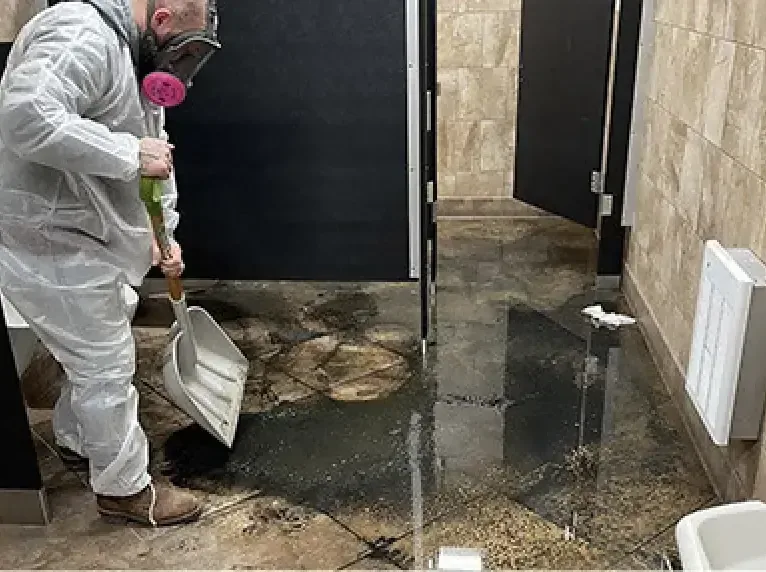
Sewage backup cleanup in Valley Village starts by keeping occupants out of the contaminated area. A backed-up drain may affect rooms well beyond the fixture where waste first appears. The restoration contractor assesses the path, sets up containment and coordinates with a plumber to stop the backup. A running fan or a bottle of disinfectant cannot replace that sequence.
First steps for sewage backup cleanup
- Exclude occupants. The household keeps children, pets and visitors outside affected rooms and avoids carrying wet belongings through clean spaces.
- Pause fixture use. Residents stop flushing or running connected fixtures until the plumbing professional evaluates the backup and its source.
- Leave fans off. Occupants avoid blowing air across sewage or contaminated debris before the cleanup team sets out the containment plan.
- Notify the manager. Tenants report affected shared spaces and possible lower-unit exposure so the manager can arrange access and source repair.
How sewage backup cleanup progresses
- 1
Define contamination
The technician traces sewage contact across floors and wall edges, records the affected materials and marks an access boundary for the cleanup work.
- 2
Remove affected finishes
The crew recovers waste water and removes contaminated porous materials, controlling debris and documenting each removal decision before the structure becomes concealed.
- 3
Clean remaining surfaces
Technicians remove soil from salvageable hard materials and follow product-label treatment instructions, including contact time and any required protective measures.
- 4
Dry and review
The drying crew measures cleaned structural materials, adjusts equipment to the remaining moisture and records conditions before the owner authorizes replacement finishes.
Containing a backup in occupied buildings
Apartments and condos along Burbank Boulevard can require manager-controlled access to shared spaces. That does not mean a backup has affected every unit. The technician inspects and documents the actual boundary, while the manager arranges entry and protects unaffected circulation routes. Around Colfax Avenue, the reported stacked-unit pipe incident illustrates how water can travel between floors. A new loss needs its own contamination assessment.
- Residents stop using fixtures connected to the suspected backup until a plumber identifies the cause and clears the restriction.
- The cleanup team uses appropriate gloves, protective clothing, eye protection and task-specific respiratory protection when exposure requires it.
- Containment and controlled access keep contaminated debris, equipment and foot traffic away from clean living spaces.
- Technicians assess porous materials above the visible water mark because contamination can wick beyond the puddle boundary.
Removal comes before final treatment
The contractor evaluates carpet, padding, insulation, drywall and other absorbent materials that contacted sewage. Affected porous materials generally need removal rather than an attempt to disinfect them in place. The crew cleans salvageable hard surfaces and applies any EPA-registered antimicrobial according to its label, including required contact time. The owner should receive a clear explanation of which materials remain and why.
- The crew bags or otherwise contains contaminated debris along a planned disposal route.
- Cleaning removes soil before a treatment product can act on the remaining surface as intended.
- Air movement begins only when the contamination-control plan makes it appropriate for the work area.
- The drying record identifies cleaned structural materials and measurements that support the next repair stage.
Identifying the source without assigning blame
Homes near Riverside Drive need a property-specific plumbing diagnosis after a backup. A plumber investigates the actual obstruction and pipe condition before the owner considers source responsibility. The plumber's findings belong in the source record, while the restoration scope identifies the resulting indoor damage. Separating those questions helps an owner evaluate cleanup decisions without relying on an unsupported cause.
The response team also considers occupants who cannot safely remain near the work area. The contractor discusses access and isolation with the owner or manager before removal begins, then documents the condition of adjoining dry rooms.
Discuss the wet materials before repairs
Sewage-contacted rooms need a controlled cleanup boundary. Describe the affected fixtures and rooms, keep occupants clear and discuss removal before attempting to dry contaminated finishes.
(888) 578-6508 Discuss the contaminated areaWhat does sewage backup cleanup cost in Valley Village, CA?
Sewage backup cleanup often ranges from $2,000 to $8,000, depending on contamination spread, demolition and access. A small contained room differs substantially from waste water reaching several rooms or a lower unit.
Contained bathroom
$2,000 to $3,500
- Isolation
- Waste removal
- Hard-surface cleaning
Adjacent room spread
$3,500 to $5,500
- Porous-material disposal
- Expanded containment
- Structural measurements
Multiple affected spaces
$5,500 to $8,000
- Complex access
- Broader cleaning scope
- Documented dry-out
The figures describe typical work scopes, not a quote. Water category, affected area, access and the time before drying change the scope. Compare the inputs in the Valley Village water damage cost calculator.
Documentation for your insurance claim
The restoration contractor records the water source, affected rooms and moisture readings before removal begins. Timestamped photographs show damaged materials and the reason for opening a wall or lifting a floor. Daily temperature, humidity and material readings document progress against a dry comparison area. An itemized scope separates extraction, disposal, cleaning and equipment use from plumbing repairs and finish replacement. The property owner keeps invoices and the initial discovery details with that record. An insurer evaluates coverage under the actual policy; a sudden plumbing release, outside flooding and a sewer backup can receive different treatment. The adjuster decides coverage, and the homeowner checks deductibles, exclusions and any applicable endorsements directly with the insurer.
Daily measurements support the IICRC S500 drying goal. The drying crew compares similar materials and investigates readings that stop improving before equipment leaves.
Sewage backup cleanup in Valley Village
Coverage includes homes and businesses around Laurel Canyon Boulevard, Colfax Avenue and Burbank Boulevard, with ZIP 91607 and 91617. The work scope follows the actual wet rooms and materials.
Additional service areas include Sherman Oaks, Studio City, North Hollywood, Encino and Hollywood.
Sewage Backup Cleanup questions in Valley Village, CA
Is sewage Category 3 even when it looks clear?
The source determines the initial contamination concern. Water from a sewage backup belongs in Category 3 even when it contains little visible solid waste. The technician evaluates contact and spread rather than judging safety from color or odor alone.
Can bleach save soaked carpet?
A surface chemical application does not reliably address contamination throughout carpet, backing and pad. The cleanup contractor assesses removal of sewage-contacted porous materials. The owner should ask for a material-specific scope rather than assuming a strong odor from a cleaning product means the assembly is safe.
Should someone open windows and run fans?
Residents should avoid moving air over contaminated surfaces before the work plan is agreed. The crew manages containment, ventilation and drying according to conditions. An ordinary fan can distribute material from the affected zone and complicate protection of adjoining rooms.
Does a backup mean the public sewer failed?
The source investigation follows the affected fixture, drain and connected pipework to identify where the backup began. A plumber investigates the affected system and documents findings. The restoration contractor records indoor damage separately, allowing the owner to discuss source repairs with the appropriate provider or property professional.
When can a bathroom return to use?
The plumber must resolve the source, and the cleanup team must complete the applicable removal, cleaning and drying steps. The contractor explains any remaining restrictions. The crew checks affected materials and cleaning status even after standing water and odor disappear.
What insurance documents should the owner keep?
The owner retains discovery photos, the plumbing diagnosis, removal notes, cleaning details and drying readings. The insurer checks the actual policy and any sewer-backup endorsement. No cleanup company can decide policy coverage; the insurer reviews the cause and policy terms.
A clear scope starts with the source
Sewage-contacted rooms need a controlled cleanup boundary. Describe the affected fixtures and rooms, keep occupants clear and discuss removal before attempting to dry contaminated finishes.
(888) 578-6508 Discuss the contaminated areaSeparate the sewage loss from clean rooms
The cleanup team assesses waste contact, controls removal and measures the cleaned structure before repairs.
(888) 578-6508 Request a sewage cleanup scope