Toilet Overflow Cleanup in Valley Village, CA
A toilet supply leak and a waste-bearing bowl overflow require different cleanup decisions. The restoration technician identifies the source, checks the bathroom boundary and assesses any spread into adjoining rooms or the floor below.
(888) 578-6508 Discuss the overflow source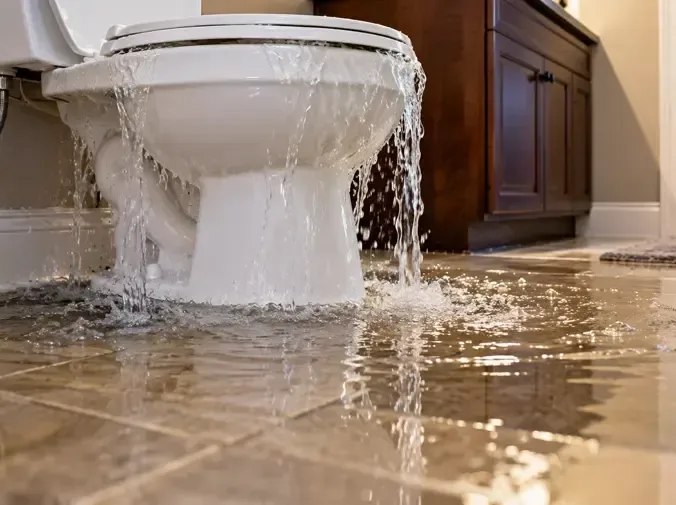
Toilet overflow cleanup in Valley Village starts with the source of the escaping water. A failed supply connection is different from a bowl that overflows with waste. The cleanup crew asks what happened, whether flushing continues to trigger the problem and how far water traveled. Residents should stop using the fixture and avoid walking through questionable water.
First steps for toilet overflow cleanup
- Stop repeated flushing. The occupant leaves the fixture unused and avoids testing it again while water or waste continues entering the room.
- Isolate access. The household keeps people and pets away from the bathroom and any wet path into adjoining rooms.
- Use a valve only safely. The owner closes a known accessible supply valve from a safe position when appropriate, without touching wet electrical devices nearby.
- Report related fixtures. The resident tells the plumber or manager whether a tub, drain or other toilet also backed up, preserving useful source information.
How toilet overflow cleanup progresses
- 1
Classify the overflow
The technician reviews whether water escaped from supply components or the bowl and maps contact across tile edges, trim and adjoining finishes.
- 2
Control contaminated spread
The crew marks an appropriate work boundary, removes water and evaluates porous materials that contacted waste-bearing overflow before ordinary drying begins.
- 3
Clean and inspect layers
Technicians clean retained hard surfaces and investigate penetrations or floor edges, following treatment labels and identifying hidden moisture that a surface wipe misses.
- 4
Verify source and drying
The plumber resolves the fixture or drainage problem while the restoration team records retained-material conditions and explains remaining repair work before closure.
Checking beyond the bathroom tile
Tile can make a bathroom look easy to wipe, but water may pass at the doorway, beneath trim or through floor penetrations. A reported pipe incident on Colfax Avenue affected stacked apartments. When a toilet leak reaches a floor opening, the technician also checks accessible rooms below for water and damp finishes. A new overflow needs its own source classification and inspection below when conditions warrant it.
Homes near Burbank Boulevard may have different bathroom floor assemblies. The technician identifies the actual underlayment and adjoining finishes before deciding that a dry tile face means a dry floor. A leak around the toilet base also requires plumbing assessment rather than repeated surface cleaning.
- Residents stop flushing and keep children and pets outside the affected bathroom and adjoining wet route.
- The technician distinguishes tank or supply water from waste-bearing bowl water before selecting a cleanup method.
- The crew checks the doorway, baseboards and adjoining carpet for contact that may require removal.
- The manager coordinates safe access below an upper-floor bathroom when moisture readings suggest downward travel.
Handling waste contact correctly
Waste-bearing overflow requires contamination precautions. The restoration contractor separates affected spaces, removes sewage-contacted porous materials and cleans retained hard surfaces. Material retention depends on waste contact, the condition of each layer and whether the affected surfaces can be reached and cleaned. Technicians follow product labels for any antimicrobial treatment, including contact time, after the appropriate cleaning.
- Protective equipment and controlled access reduce exposure during removal and cleaning.
- Contaminated rugs, pad or absorbent trim need material-specific decisions rather than ordinary surface drying.
- Debris handling should avoid tracking bathroom contamination through dry living areas.
- Drying follows the cleanup sequence and measures retained structural materials where water entered.
Resolving repeat overflow before finish repair
At a property near Riverside Drive, the plumber determines whether the fixture, a local obstruction or another drainage issue caused the overflow. The source investigation identifies the affected plumbing and any further provider questions. The restoration scope should identify the resulting wet materials while the plumbing record explains source findings.
The owner should keep discovery photos and note whether other fixtures were affected. The contractor then documents removal and drying so replacement trim or flooring does not conceal an unresolved wet edge. A bathroom can require further work even after the toilet flushes normally again.
Discuss the wet materials before repairs
The source of a toilet overflow determines the cleanup precautions. Describe whether water came from the supply or bowl and where it spread before attempting further cleaning.
(888) 578-6508 Review the bathroom water sourceWhat does toilet overflow cleanup cost in Valley Village, CA?
Toilet overflow cleanup commonly costs $600 to $3,500. A limited clean supply spill differs from waste water reaching carpet, wall edges or a lower ceiling. Plumbing repair and finish replacement may add separate costs.
Limited clean supply spill
$600 to $1,200
- Water recovery
- Edge checks
- Initial measurements
Contaminated bathroom area
$1,200 to $2,300
- Containment
- Material assessment
- Hard-surface cleaning
Overflow beyond the room
$2,300 to $3,500
- Adjoining-space checks
- Porous removal
- Structural drying
The figures describe typical work scopes, not a quote. Water category, affected area, access and the time before drying change the scope. Compare the inputs in the Valley Village water damage cost calculator.
Documentation for your insurance claim
The restoration contractor records the water source, affected rooms and moisture readings before removal begins. Timestamped photographs show damaged materials and the reason for opening a wall or lifting a floor. Daily temperature, humidity and material readings document progress against a dry comparison area. An itemized scope separates extraction, disposal, cleaning and equipment use from plumbing repairs and finish replacement. The property owner keeps invoices and the initial discovery details with that record. An insurer evaluates coverage under the actual policy; a sudden plumbing release, outside flooding and a sewer backup can receive different treatment. The adjuster decides coverage, and the homeowner checks deductibles, exclusions and any applicable endorsements directly with the insurer.
Daily measurements support the IICRC S500 drying goal. The drying crew compares similar materials and investigates readings that stop improving before equipment leaves.
Toilet overflow cleanup in Valley Village
Coverage includes homes and businesses around Laurel Canyon Boulevard, Colfax Avenue and Burbank Boulevard, with ZIP 91607 and 91617. The work scope follows the actual wet rooms and materials.
Additional service areas include Sherman Oaks, Studio City, North Hollywood, Encino and Hollywood.
Toilet Overflow Cleanup questions in Valley Village, CA
Is every toilet leak sewage?
No. A leak from the clean supply or tank differs from waste-bearing bowl water. The technician asks where the release occurred and what it contacted. The source and conditions guide the category assessment, so the fixture name alone should not determine the entire cleanup method.
Can tile be wiped and left alone?
The visible tile surface may be only part of the affected assembly. Water can reach underlayment at edges, penetrations or the doorway. The contractor checks those routes and contamination before deciding what can remain. Layers beneath a shiny, dry tile face can still contain trapped water.
Should the toilet be flushed to see if the blockage cleared?
Repeated flushing can add more water and waste before the cause is known. The occupant should stop using the fixture and arrange plumbing assessment. Reporting whether other drains are affected gives the plumber useful information without deliberately recreating the overflow.
Does contaminated carpet outside the bathroom need removal?
The cleanup contractor evaluates waste contact across carpet, backing and pad. Sewage-contacted porous materials generally require removal rather than ordinary drying. The scope should show the affected boundary and disposal plan so contaminated items do not travel through clean rooms.
Why might the ceiling below need checking?
Water can pass through penetrations or layered floor assemblies before appearing beneath the bathroom. The manager coordinates authorized access when the path or readings suggest spread. The technician documents the lower space rather than assuming either complete isolation or damage to every unit.
Can a functioning toilet mean the cleanup is finished?
A cleared blockage resolves a source issue, but wet walls, floor layers or contaminated materials may remain. The restoration team completes its separate inspection, cleaning and drying scope. The owner should confirm both plumbing status and retained-material conditions before replacing finishes.
A clear scope starts with the source
The source of a toilet overflow determines the cleanup precautions. Describe whether water came from the supply or bowl and where it spread before attempting further cleaning.
(888) 578-6508 Review the bathroom water sourceCheck the bathroom edges after an overflow
The cleanup crew assesses contamination and hidden floor moisture while the plumbing cause receives separate attention.
(888) 578-6508 Arrange overflow damage assessment