Structural Drying in Valley Village, CA
The drying team measures wet materials, selects suitable dry references and adjusts air movement with dehumidification. Equipment stays according to the recorded moisture trend, rather than the first dry-looking surface.
(888) 578-6508 Discuss measured material drying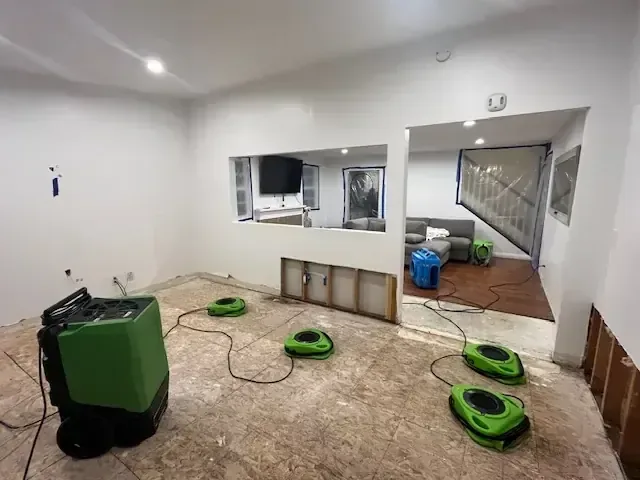
Structural drying in Valley Village addresses water held inside building materials after liquid removal. A floor can feel dry while the subfloor or adjoining wall remains wet. The technician identifies the assembly, selects measurement points and compares affected material with a suitable dry reference. That record gives the owner a reason for equipment placement and an objective way to follow progress.
First steps for structural drying
- Confirm source control. The owner arranges repair of the active leak so drying equipment does not compete with continuing water entry.
- Keep equipment operating. Occupants follow the contractor's equipment instructions and report unusual noise, tripped circuits or access problems instead of silently changing the setup.
- Maintain clear airflow. The household keeps furniture and stored belongings away from designated drying surfaces and safe equipment clearances.
- Ask about measurement points. The owner requests an explanation of the wet materials, comparison readings and conditions that determine the next drying decision.
How structural drying progresses
- 1
Map moisture across materials
The technician records affected materials and suitable comparison points, checks contamination and source status, and identifies layers requiring access before drying begins.
- 2
Set the drying environment
The crew balances air movement and dehumidification with the wet assembly, available power and safe routes through the occupied or restricted work area.
- 3
Review measured progress
Repeat readings show which materials improve and which stall, prompting adjustments to access, equipment placement or source investigation rather than reliance on a calendar.
- 4
Document the handoff
The contractor records completion criteria, retained-material readings and any additional installer testing needed, giving the owner a clear basis for the repair phase.
Matching equipment to the actual assembly
Published local descriptions include single-story houses and apartments on the main boulevards. The drying plan for a house around Riverside Drive should therefore follow its construction, not a neighborhood-wide assumption. An apartment near Colfax Avenue may require access below an upper-floor release; the documented stacked-unit incident shows why inspection can extend beyond one room.
- The technician identifies the water category before deciding which materials belong in the drying scope.
- Air movers support evaporation at wet surfaces while dehumidifiers remove the resulting moisture from room air.
- Dense materials and concealed layers may need different access or equipment from exposed drywall.
- Electrical capacity, safe walking routes and equipment clearances shape the setup in an occupied property.
Reading the trend instead of the calendar
The IICRC S500 standard informs water-damage drying practice. A crew records material moisture and relevant indoor conditions, then checks whether the trend supports the plan. A reading that stalls can indicate limited access, a continuing source or a measurement issue. The technician investigates rather than leaving equipment unchanged simply because a preset number of days has not elapsed.
Homes near Burbank Boulevard receive the same material-based assessment: geography helps locate the building, while the wet assembly sets the drying load. Opening a window without comparing indoor and outdoor conditions can undermine controlled drying instead of helping it.
- Marked measurement points allow meaningful comparisons between visits and reduce confusion from material variation.
- Temperature and humidity readings help explain why evaporation may slow despite equipment operation.
- A dry reference should resemble the affected material and represent an appropriate comparison condition.
- The contractor records equipment changes and the reason for them when access or moisture conditions change.
Preparing a reliable handoff to repair
The drying record should identify retained materials, removed finishes and any area the crew could not inspect. Flooring installation may require additional product-specific moisture testing, especially over concrete. The owner should understand that a restoration moisture check and an installer's acceptance test can serve different purposes.
Reconstruction starts with a clear source status and documented material conditions. Turning equipment off because of noise or replacing trim before the final review can obscure unresolved moisture. The contractor discusses occupied-room needs and practical access arrangements while preserving a measurable drying plan.
Discuss the wet materials before repairs
Dry surfaces can conceal moisture in the assembly below. Describe the affected materials and source status so the drying plan can begin with useful comparison readings.
(888) 578-6508 Review the material moisture planWhat does structural drying cost in Valley Village, CA?
Structural drying typically costs $1,000 to $5,000, with equipment quantity, wet materials and monitoring duration driving the range. Extraction, contaminated-material removal and reconstruction may be separate parts of the overall loss.
Limited exposed materials
$1,000 to $1,800
- Dry reference checks
- Focused equipment
- Progress readings
Several wet assemblies
$1,800 to $3,400
- More drying capacity
- Cavity evaluation
- Daily condition logs
Dense or concealed moisture
$3,400 to $5,000
- Access adjustments
- Extended monitoring
- Repair handoff records
The figures describe typical work scopes, not a quote. Water category, affected area, access and the time before drying change the scope. Compare the inputs in the Valley Village water damage cost calculator.
Documentation for your insurance claim
The restoration contractor records the water source, affected rooms and moisture readings before removal begins. Timestamped photographs show damaged materials and the reason for opening a wall or lifting a floor. Daily temperature, humidity and material readings document progress against a dry comparison area. An itemized scope separates extraction, disposal, cleaning and equipment use from plumbing repairs and finish replacement. The property owner keeps invoices and the initial discovery details with that record. An insurer evaluates coverage under the actual policy; a sudden plumbing release, outside flooding and a sewer backup can receive different treatment. The adjuster decides coverage, and the homeowner checks deductibles, exclusions and any applicable endorsements directly with the insurer.
Daily measurements support the IICRC S500 drying goal. The drying crew compares similar materials and investigates readings that stop improving before equipment leaves.
Structural drying in Valley Village
Coverage includes homes and businesses around Laurel Canyon Boulevard, Colfax Avenue and Burbank Boulevard, with ZIP 91607 and 91617. The work scope follows the actual wet rooms and materials.
Additional service areas include Sherman Oaks, Studio City, North Hollywood, Encino and Hollywood.
Structural Drying questions in Valley Village, CA
Why is room humidity alone not enough?
Air conditions show part of the drying environment, but they do not measure water remaining inside wood, drywall or concrete. The technician combines ambient readings with material checks. A comfortable room can still contain damp layers that need access or further drying.
What does a dry reference mean?
A dry reference is an appropriate comparison using similar material outside the affected area or another suitable benchmark. The technician explains the measurement method and target. Different materials and instruments should not be treated as though every displayed number has the same meaning.
Can windows replace a dehumidifier?
Outdoor air may help or hinder depending on its moisture and temperature. The drying team evaluates those conditions before changing the enclosure. Opening windows without that comparison can add moisture and make the recorded progress harder to interpret, especially while equipment is controlling the indoor environment.
Why would the crew open a wall that feels dry?
A surface check may not reveal moisture in insulation or a concealed cavity. The contractor explains the readings and access limits that support an opening. The goal is to expose the assembly that needs attention, rather than removing a wall solely because water was nearby.
Does the floor installer need another test?
The installer may need product-specific moisture testing before applying flooring or adhesive. A restoration drying record helps describe progress but does not replace every manufacturer requirement. The owner should coordinate the handoff so the substrate meets the intended installation criteria.
When should equipment be removed?
The contractor reviews material progress, source status and the agreed drying goals. Equipment should not leave merely because the surface looks normal or a quoted number of days has passed. The final record identifies the conditions supporting removal and any remaining repair limitations.
A clear scope starts with the source
Dry surfaces can conceal moisture in the assembly below. Describe the affected materials and source status so the drying plan can begin with useful comparison readings.
(888) 578-6508 Review the material moisture planMake the repair handoff measurable
The drying crew tracks retained materials and documents the conditions that support equipment removal.
(888) 578-6508 Arrange a measured structural dry-out