Structural Drying in North Hollywood
A room can lose its puddles before its materials lose their moisture. Structural drying in North Hollywood focuses on the retained assembly, using access and repeated measurements to shape the equipment arrangement.
(888) 578-6508 Discuss retained material moisture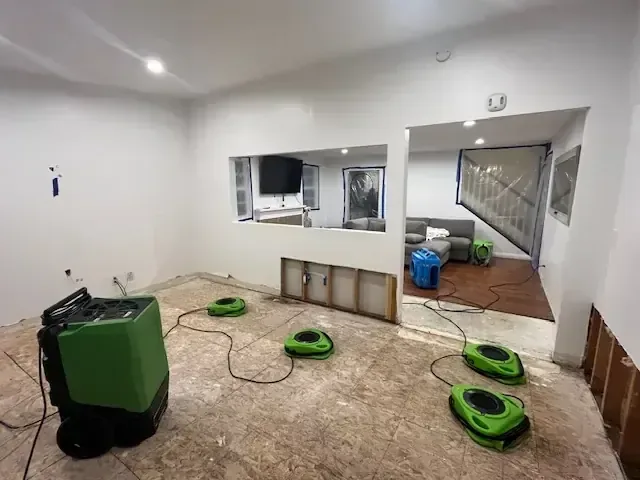
Drying is a controlled process for the materials that remain after a water loss. In North Hollywood, the useful question is not simply how many machines fit in a room, but how moisture can leave the affected assembly. A covered floor edge, insulated wall cavity or dense material can require different access from an exposed surface receiving direct airflow.
First steps for structural drying
- Confirm the source status. The request should explain whether water entry has stopped and whether extraction or material removal has already occurred in the affected space.
- Describe retained assemblies. Information about wet walls, floors or overhead layers helps identify which materials need access and what finishes currently cover them.
- Preserve inspection access. Dry belongings can be positioned away from affected edges so equipment placement and repeated material checks remain practical throughout the drying work.
- Report changing conditions. Renewed dampness, continued dripping or equipment interruption should be communicated promptly so the arrangement can be reassessed against the current source and material conditions.
How structural drying progresses
- 1
Create a material moisture record
The initial assessment identifies retained assemblies and repeatable measurement locations, relating visible damage to concealed layers and planning the access needed to track the drying work meaningfully.
- 2
Build the drying arrangement
Airflow, moisture removal and room separation are planned together around exposed surfaces, the material load and practical access through the affected interior during ongoing equipment operation.
- 3
Interpret progress and adjust
Repeated observations show where moisture is leaving and where progress remains limited, supporting changes in equipment placement, material exposure or source investigation as the work continues.
- 4
Hand off the retained condition
Closing documentation identifies the areas addressed, observed material conditions and remaining repair needs, helping the owner coordinate replacement finishes without obscuring unfinished portions of the drying scope.
Check what remains wet and accessible
The starting record should identify the source status, removed liquid and the materials selected to remain. Measurements need recognizable locations so later checks can show change in the same assembly. A dry surface reading beside a wet concealed layer can be misleading when treated alone. The plan should describe how the full affected thickness or connected cavity will be assessed.
- Wall finishes may restrict access to damp framing and insulation that need separate decisions before the assembly can dry effectively.
- Floor coverings can hold moisture underneath, requiring checks of backing, adhesive or subfloor conditions beyond the visible upper surface.
- Furniture and stored contents can block airflow and prevent repeated access to the material locations being monitored during the work.
- Room separation and ventilation conditions can change equipment performance and should be considered when the drying arrangement is adjusted.
Arrange equipment for the actual interior space
Victory-Vineland Recreation Center has a large auditorium used for classes and indoor sports. That community building illustrates how room size and use can vary locally. For a property near Vineland Avenue or Victory Boulevard, the drying assessment still starts with its own layout, wet materials and access needs. Equipment placement should follow those conditions.
Air movement helps moisture leave exposed materials, while dehumidification manages moisture released into the air. The arrangement should work as a coordinated system. Additional machines do not solve a sealed wet layer that lacks useful access. Progress checks can indicate whether a surface needs exposure, whether equipment should move or whether an ongoing source needs renewed attention.
Use the record to decide the next repair stage
Water extraction addresses accessible liquid before this phase. Structural drying then documents the condition of retained materials as the work progresses. A predetermined calendar promise is less useful than a record showing what remains wet and how the plan responds. Finish repairs should be coordinated with that material condition.
At completion, the owner should receive a clear description of the areas dried and any work still required. Photographs of openings and measurements at identified locations help support the handoff. Reconstruction can then proceed with an understanding of the retained assembly rather than relying on a room that merely feels comfortable.
Discuss the wet materials before repairs
A dry looking room can still contain wet assemblies. Describe the materials involved and any previous removal work so the drying assessment can plan useful access, measurement points and equipment placement.
(888) 578-6508 Assess the retained wet materialsWhat does structural drying cost in North Hollywood, CA?
North Hollywood structural drying estimates reflect material involvement, access and equipment needs. The written scope should explain monitoring and planned exposure while identifying extraction, disposal or replacement finishes that are priced separately from retained material drying.
Limited exposed materials
$1,000 to $1,800
- Accessible wet surfaces
- Focused monitoring points
- Simple room arrangement
Several wet assemblies
$1,800 to $3,400
- Connected material checks
- Broader equipment layout
- Added access needs
Dense or concealed moisture
$3,400 to $5,000
- Restricted moisture release
- Selective exposure work
- Expanded progress assessment
The figures describe typical work scopes, not a quote. Water category, affected area, access and the time before drying change the scope. Compare the inputs in the water damage cost calculator.
Documentation for your insurance claim
The restoration contractor records the water source, affected rooms and moisture readings before removal begins. Timestamped photographs show damaged materials and the reason for opening a wall or lifting a floor. Daily temperature, humidity and material readings document progress against a dry comparison area. An itemized scope separates extraction, disposal, cleaning and equipment use from plumbing repairs and finish replacement. The property owner keeps invoices and the initial discovery details with that record. An insurer evaluates coverage under the actual policy; a sudden plumbing release, outside flooding and a sewer backup can receive different treatment. The adjuster decides coverage, and the homeowner checks deductibles, exclusions and any applicable endorsements directly with the insurer.
Daily measurements support the IICRC S500 drying goal. The drying crew compares similar materials and investigates readings that stop improving before equipment leaves.
Structural drying in North Hollywood
Assessment details should describe the wet assembly and the space around it. A property near Victory-Vineland Recreation Center may have different access needs from another building despite sharing the same community.
The same service nearby: structural drying in Valley Village, Studio City, Sherman Oaks.
All water damage services in North Hollywood · View all service areas
Structural Drying questions in North Hollywood, CA
Why keep drying equipment after the puddle is gone?
Extraction removes liquid that equipment can collect directly, while porous materials can continue holding absorbed moisture. Drying addresses that retained water. Material observations show whether the floor, wall or framing assembly still needs controlled conditions before the next stage of repair can begin safely.
Does a warm room mean the materials are dry?
A room can feel comfortable while moisture remains inside the wall or beneath the floor. Material checks need to consider concealed and dense surfaces as well as exposed finishes. The drying record should connect room conditions with the actual assembly so completion is based on more than how the space feels.
Why might equipment move during the work?
Different portions of an assembly can release moisture at different rates. Repeated observations may show a persistent wet edge or a surface that needs better access. Changing the arrangement allows airflow and moisture removal to address the current conditions instead of preserving a setup that no longer fits.
Can occupants turn the equipment off overnight?
Interruptions change the controlled conditions supporting the drying plan. Equipment operation and access concerns should be discussed with the cleanup provider so a suitable arrangement can be agreed. The record should account for interruptions when interpreting moisture progress and deciding whether the setup needs adjustment.
Why open a wall if air movers are running?
A finish can prevent useful airflow from reaching a wet cavity. Equipment in the room may dry the exposed surface while moisture remains behind it. The access proposal should explain which retained materials need exposure and how the opening will support inspection or more effective drying.
What determines readiness for replacement finishes?
The retained materials should reach conditions suitable for the planned repair, with the source corrected and remaining work clearly identified. Measurement records and photographs support that handoff. The installer may also have requirements for the chosen finish that need attention before the assembly is enclosed or covered again.
A clear scope starts with the source
A dry looking room can still contain wet assemblies. Describe the materials involved and any previous removal work so the drying assessment can plan useful access, measurement points and equipment placement.
(888) 578-6508 Assess the retained wet materialsConnect drying progress with repair planning
Material observations help explain when the affected assembly can move from equipment operation to the next repair stage.
(888) 578-6508 Discuss the drying assessment