North Hollywood Toilet Overflow Cleanup
Water around a toilet can come from the supply or from an overflowing bowl, and that distinction shapes cleanup. North Hollywood assessments identify the source before following the spill beneath bathroom fixtures and across nearby thresholds.
(888) 578-6508 Discuss the bathroom overflow path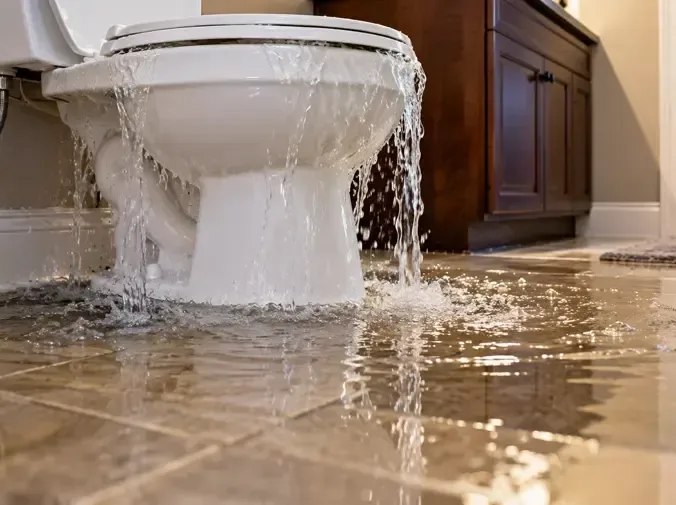
The first cleanup decision after a toilet overflow concerns the water itself. A supply connection release and water coming over the bowl can require different handling. At a North Hollywood property, the assessment should identify that source, then follow contact across the bathroom rather than assuming tile kept the spill confined above the floor assembly.
First steps for toilet overflow cleanup
- Pause use of the fixture. Flushing should pause for source assessment, with connected fixtures kept unused while drainage problems remain active.
- Keep the floor isolated. People and pets should avoid the spill so water from the bathroom is not tracked into the hall or another unaffected occupied room.
- Identify the visible source. The cleanup request should distinguish supply leakage from bowl overflow where observed, including any continuing discharge and movement toward the doorway or vanity.
- Document contacted contents. Safe photographs can show mats, stored belongings and floor edges reached by water before items are moved through the property for cleaning or disposal.
How toilet overflow cleanup progresses
- 1
Classify the observed release
The assessment identifies the source and contacted surfaces, connecting the fixture problem with any spread into adjoining floor assemblies.
- 2
Set a controlled cleanup boundary
Access and contents handling are planned according to the water conditions, keeping wet items and equipment routes separate from unaffected rooms while the source receives attention.
- 3
Remove clean and expose as needed
Accessible liquid is collected, contacted surfaces are addressed and concealed edges are assessed for opening so cleaning and drying can reach the layers that actually became wet.
- 4
Document readiness and remaining fixture work
Closing notes describe retained material conditions and identify separate plumbing, fixture or finish tasks, allowing the owner to coordinate the bathroom's return around the completed cleanup scope.
Follow the overflow around fixed bathroom features
Water can reach the vanity base, wall trim and doorway before much remains around the toilet. Grout joints and perimeter gaps also deserve attention where the spill has had access beneath a finish. The cleanup boundary should include those edges, with the condition of porous materials assessed according to the actual water source and contact.
- A vanity toe space may hold water out of sight after the accessible tiles have been wiped or extracted.
- A doorway transition can allow spread into carpet backing or another floor layer in the adjoining hall or room.
- Bath mats and stored floor items need separate handling when contact with bowl water changes the contamination assessment.
- Water reaching a wall base can affect concealed materials that remain damp after the upper tile surface looks clear.
Keep the fixture problem separate from interior recovery
Vineland Avenue and Saticoy Street are useful local references for a property request. The bathroom details should explain whether the water is still rising, whether other fixtures are affected and whether a plumbing assessment has occurred. Repeated flushing can increase the spill, so further fixture use should pause while the cause is being addressed.
Restoring normal drainage or repairing a supply connection stops the source. Cleanup then handles the water and affected layers already in the room. If the release involved wastewater, the scope should specify access restrictions and material handling before ordinary traffic resumes through the bathroom. The sewage backup service covers broader drain related losses.
Check the concealed edge before returning the room
Extraction and cleaning can make the exposed floor look finished while concealed material remains wet. Moisture observations should account for the doorway, fixture surroundings and accessible wall bases. Opening a limited section may be necessary to reach the affected layer, and the reason should be explained in the written scope before removal begins.
Final notes should identify cleaned surfaces, removed materials and remaining repairs. Any plumbing work or fixture reinstatement that falls outside cleanup should be clear. The owner then has a useful sequence for completing the bathroom, with drying and contamination decisions addressed before new trim or floor finishes cover the affected edges.
Discuss the wet materials before repairs
An overflow needs a clear account of its source and spread. Describe the fixture, contacted floor edges and any adjoining wet space so the technician can select suitable precautions for cleanup in the bathroom.
(888) 578-6508 Assess the bathroom water contactWhat does toilet overflow cleanup cost in North Hollywood, CA?
North Hollywood toilet overflow estimates depend on the source, contamination and spread beyond the bathroom. The scope should identify removal, cleaning and drying costs separately from fixture repairs and replacement of damaged floor or wall finishes.
Limited clean supply spill
$600 to $1,200
- Accessible tile water
- Small wet boundary
- Focused extraction
Contaminated bathroom area
$1,200 to $2,300
- Controlled handling
- Contacted surfaces
- Material decisions
Overflow beyond the room
$2,300 to $3,500
- Threshold spread
- Additional layers
- Broader drying
The figures describe typical work scopes, not a quote. Water category, affected area, access and the time before drying change the scope. Compare the inputs in the water damage cost calculator.
Documentation for your insurance claim
The restoration contractor records the water source, affected rooms and moisture readings before removal begins. Timestamped photographs show damaged materials and the reason for opening a wall or lifting a floor. Daily temperature, humidity and material readings document progress against a dry comparison area. An itemized scope separates extraction, disposal, cleaning and equipment use from plumbing repairs and finish replacement. The property owner keeps invoices and the initial discovery details with that record. An insurer evaluates coverage under the actual policy; a sudden plumbing release, outside flooding and a sewer backup can receive different treatment. The adjuster decides coverage, and the homeowner checks deductibles, exclusions and any applicable endorsements directly with the insurer.
Daily measurements support the IICRC S500 drying goal. The drying crew compares similar materials and investigates readings that stop improving before equipment leaves.
Toilet overflow cleanup in North Hollywood
The request should identify whether the bowl or supply overflowed and which doorway the water reached. A property reference near Vanowen Street can help pinpoint location alongside the bathroom access details.
The same service nearby: toilet overflow cleanup in Valley Village, Studio City, Sherman Oaks.
All water damage services in North Hollywood · View all service areas
Toilet Overflow Cleanup questions in North Hollywood, CA
Does every toilet related spill contain the same water?
The source matters. Water escaping from a supply connection differs from water overflowing a used bowl. The assessment should record what was observed and which surfaces were contacted before choosing removal, cleaning and porous material handling appropriate to the actual conditions inside the bathroom.
Should the toilet be flushed again after the overflow stops?
Further use should pause until the cause has been assessed. Another flush can restart or enlarge the release if the drainage problem remains. During the cleanup request, details about the original overflow and any other affected fixtures help connect source correction with the interior damage assessment.
Can tile prevent damage beneath the bathroom floor?
Tile is only the visible part of the assembly. Water can reach perimeter gaps, joints or openings around fixtures and collect beneath the surface. The assessment should check those routes and the adjoining doorway rather than deciding the underlying floor is dry from the appearance of the tiles.
Why keep a wet bath mat out of another room?
A contacted mat can carry water and contamination beyond the bathroom. Its handling should follow the source assessment and contents plan. Photographing it in place can document the loss before movement, while a separate handling route helps avoid turning an unaffected floor into part of the cleanup area.
Will cleanup include removing the toilet or vanity?
Removal depends on access and the affected materials, and should be explained before it occurs. A fixture or cabinet can conceal a wet edge that needs attention. The written scope should distinguish any required plumbing disconnection or reinstatement from the cleanup of the surrounding floor and walls.
What determines whether the bathroom can be used again?
The source needs correction, contacted surfaces need appropriate handling and retained materials must be ready for the next stage. The completion discussion should identify remaining drying restrictions or repairs. Normal use should be coordinated with those conditions, particularly where openings, equipment or unfinished fixture work still affect safe access.
A clear scope starts with the source
An overflow needs a clear account of its source and spread. Describe the fixture, contacted floor edges and any adjoining wet space so the technician can select suitable precautions for cleanup in the bathroom.
(888) 578-6508 Assess the bathroom water contactFollow the spill past the fixture
Cleanup should address concealed edges and retained materials before the room receives replacement finishes or returns to ordinary use.
(888) 578-6508 Discuss the overflow assessment