Crawl Space Water Removal in Encino
Water beneath a floor can remain out of sight while insulation and framing stay wet. Encino crawl space cleanup starts with safe access, the water source and the condition of the overhead assembly.
(888) 578-6508 Assess water beneath the floor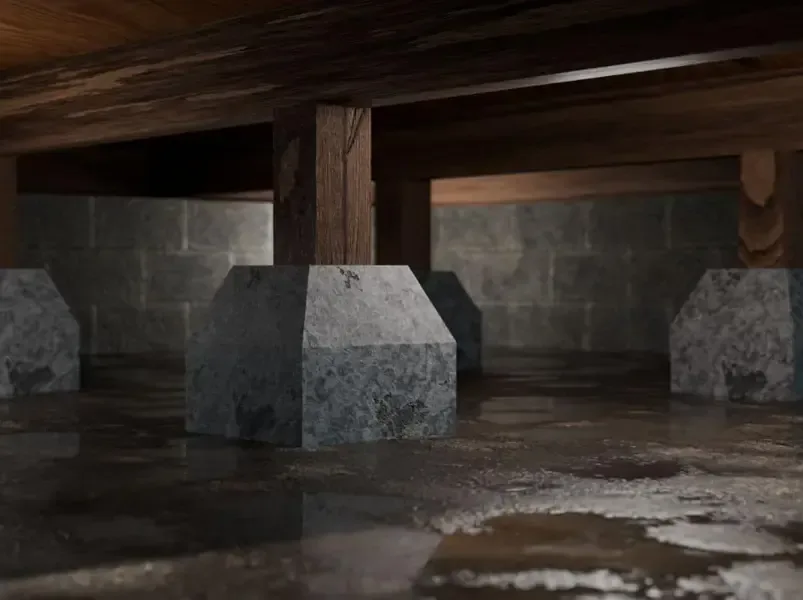
A crawl space opening gives only a partial view of the area beneath a floor. Water can collect behind supports, under ground covering or beneath sagging insulation beyond the entrance. For an Encino property with this kind of space, the assessment needs a safe access plan before anyone attempts collection or places drying equipment below the occupied rooms.
First steps for crawl space water removal
- Remain outside the opening. Keep occupants away from the underfloor entrance and avoid reaching past supports to inspect wiring, plumbing or fallen insulation.
- Describe the source history. Report recent pipe or drain problems and whether a repair professional has already stopped the release that may have filled the space.
- Note visible overhead changes. From safe ground, describe wet insulation and any change in the floor above so the assessment includes the entire affected assembly.
- Preserve the access route. Clear dry movable obstructions around the entrance while leaving underfloor debris and ground covering for planned handling after access conditions are assessed.
How crawl space water removal progresses
- 1
Evaluate entry and collection conditions
The initial assessment checks access, hazards and the reported source, then determines how equipment can safely reach the affected area beneath the floor.
- 2
Remove water through controlled access
Collection accounts for low pockets, supports and water quality, with a route that protects the entrance and surrounding occupied areas from additional spread.
- 3
Assess overhead materials
Insulation, joists and subfloor condition determine removal and drying needs, including areas concealed by fallen material or ground covering during the initial inspection.
- 4
Document the remaining assembly
Readings follow retained wood, while completion notes identify unfinished source repair, insulation replacement or access restoration needed after the standing water is removed.
Describe the opening without climbing inside
Restricted clearance, electrical equipment and uncertain water quality can make entry unsafe. From a dry position, describe the opening, visible water and any recent plumbing problem. Keep occupants away from the access point. The cleanup professional needs to evaluate entry conditions and the route for removing water and affected materials before the underfloor work begins.
Los Encinos State Historic Park includes the de la Ossa Adobe and the Garnier building. Their different materials make them distinct local landmarks. At the affected property, the assessment identifies its own supports, framing and floor layers directly, then selects methods suited to the actual structure above the water.
Water collection is only the lower half of the task
Removing a pool from the ground does not address insulation touching wet surfaces or moisture held in overhead wood. The inspection should follow the water source and check the bottom of the floor assembly. Wet or fallen insulation can limit access and may need removal so the remaining framing can be examined and dried.
- Report any plumbing repair beneath the floor and whether the released water came from a supply pipe or drain.
- Describe wet insulation visible at the opening without reaching inside to pull material down or move it.
- Keep ground covering and debris in place until their condition and safe handling can be assessed.
- Tell the assessor about rooms above the wet space where flooring has changed or an unusual damp condition appeared.
Give the underfloor assembly a measurable endpoint
The drying arrangement must work within the available clearance and reach affected surfaces without creating an unsafe occupied space above. Air movement and humidity management should be adjusted to the assembly, while repeated readings show whether joists and subfloor materials are responding. After pumping, the technician continues checking the joists and subfloor above the cleared ground until the readings support the drying goal.
Structural drying may continue after standing water is collected. The completion record should distinguish source repairs, removed insulation and the condition of retained materials. Any remaining access, ground covering or floor repairs need a clear handoff before the opening is closed and normal use resumes above.
Discuss the wet materials before repairs
Describe the opening, visible water and any recent plumbing problem from a safe position. Underfloor cleanup needs an access plan that reaches the accumulation and the wet materials above it.
(888) 578-6508 Discuss safe underfloor cleanup accessWhat does crawl space water removal cost in Encino, CA?
Crawl space water removal in Encino depends on clearance, water quality and wet overhead materials. A shallow accessible pool differs from an area requiring insulation removal or difficult entry before the framing can be dried.
Accessible shallow water
$1,500 to $2,700
- Usable opening
- Localized ground accumulation
- Basic framing assessment
Wet insulation and joists
$2,700 to $4,500
- Insulation handling needs
- Damp overhead materials
- Coordinated underfloor drying
Difficult or contaminated loss
$4,500 to $6,500
- Restricted working clearance
- Controlled material removal
- Complex cleanup access
The figures describe typical work scopes, not a quote. Water category, affected area, access and the time before drying change the scope. Compare the inputs in the water damage cost calculator.
Documentation for your insurance claim
The restoration contractor records the water source, affected rooms and moisture readings before removal begins. Timestamped photographs show damaged materials and the reason for opening a wall or lifting a floor. Daily temperature, humidity and material readings document progress against a dry comparison area. An itemized scope separates extraction, disposal, cleaning and equipment use from plumbing repairs and finish replacement. The property owner keeps invoices and the initial discovery details with that record. An insurer evaluates coverage under the actual policy; a sudden plumbing release, outside flooding and a sewer backup can receive different treatment. The adjuster decides coverage, and the homeowner checks deductibles, exclusions and any applicable endorsements directly with the insurer.
Daily measurements support the IICRC S500 drying goal. The drying crew compares similar materials and investigates readings that stop improving before equipment leaves.
Crawl space water removal in Encino
For an Encino property with underfloor water, describe the access opening and any visible accumulation. Mention odors, nearby electrical equipment and a source repair already completed without entering the space.
The same service nearby: crawl space water removal in Valley Village, Sherman Oaks, Studio City.
All water damage services in Encino · View all service areas
Crawl Space Water Removal questions in Encino, CA
Is it safe to crawl in and inspect the water?
Entry conditions need assessment before anyone enters an underfloor space with water. Electrical components, limited clearance and unknown contamination can create hazards. Describe what is visible from a dry position and leave the internal inspection to an appropriately equipped professional.
Does pumping out the water dry the floor above?
Collection removes the available liquid below, but joists, subfloor layers and insulation may still hold moisture. Those materials need separate inspection and drying decisions. The work should address the entire affected assembly instead of ending when the ground looks clear.
Should wet insulation be pulled out before assessment?
Handling can expose a person to contaminated water or disturb material in a restricted space. Leave it for a planned removal decision. Its type, condition and contact with water determine how it should be handled and what access the remaining framing needs.
Can water remain hidden beneath a ground covering?
Yes. The covering can conceal accumulation and complicate visual inspection. The assessment should consider low areas and material condition before movement. Any lifting or removal belongs within the cleanup plan so hidden water does not escape into an unprepared work route.
What information helps identify the likely source?
Recent plumbing work, visible dripping and the timing of water appearance are useful observations. A professional still needs to identify the actual source. Describe those details without entering the space, and keep repair documentation available for the restoration assessment that follows.
How is completion beneath the floor documented?
The record should identify water removal, materials taken out and the condition of retained framing or subfloor layers. Moisture readings help explain progress. It should also distinguish any insulation, access opening or source repairs that remain after the cleanup work is completed.
A clear scope starts with the source
Describe the opening, visible water and any recent plumbing problem from a safe position. Underfloor cleanup needs an access plan that reaches the accumulation and the wet materials above it.
(888) 578-6508 Discuss safe underfloor cleanup accessAddress water below and moisture above
Collection, insulation decisions and framing checks belong in the same scope when water gathers beneath an occupied floor.
(888) 578-6508 Arrange a crawl space assessment