Structural Drying in Encino
The puddle can be gone while a wall base remains saturated. Structural drying in Encino focuses on moisture retained by building materials, with equipment adjusted to their response rather than appearance alone.
(888) 578-6508 Discuss retained building moisture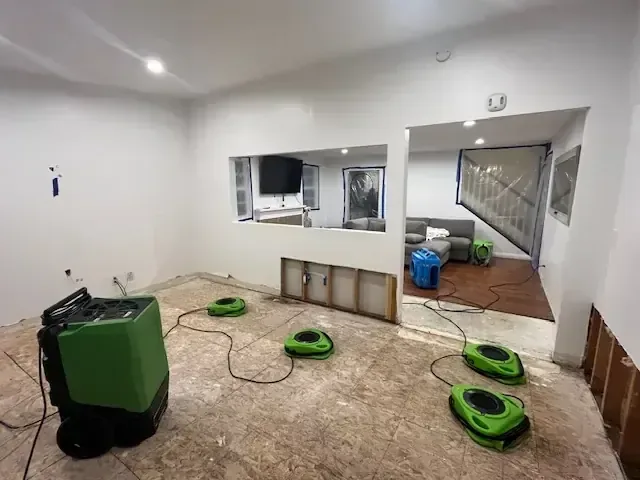
Room air and building materials tell different parts of the drying story. A space can feel comfortable while a dense floor layer or concealed wall base still holds water. Structural drying in Encino begins by identifying those materials and setting a plan for moisture release, with a record of their condition before equipment is arranged.
First steps for structural drying
- Describe completed cleanup work. Describe source repair, collection, removal and cleaning tasks already completed in the affected rooms before equipment placement is planned.
- Keep wet surfaces accessible. Move dry belongings away from affected walls where safe, leaving openings and floor edges visible for moisture assessment and equipment planning.
- Explain occupancy constraints. Mention essential walking routes, closed rooms and times when access is possible so the drying arrangement can account for the occupied property.
- Preserve the equipment arrangement. Once equipment is in position, report concerns before moving machines or blocking airflow so changes can be made with the drying objective in mind.
How structural drying progresses
- 1
Start the material moisture record
Inspection identifies wet assemblies and suitable reference areas, documents accessible surfaces and notes concealed layers that need further investigation before the equipment layout is finalized.
- 2
Match access and equipment to materials
Air movement and dehumidification account for room conditions, with selective exposure where a covering prevents moisture from reaching the managed environment around the wet assembly.
- 3
Interpret readings and adjust equipment
Monitoring compares material response, allowing placement, access or source investigation to change when part of the structure progresses slowly under the existing arrangement.
- 4
Provide results for the repair handoff
Completion notes describe monitored materials, their achieved condition and remaining openings or finish repairs so reconstruction follows a clear account of the drying work.
Material identification comes before equipment count
Los Encinos State Historic Park preserves the de la Ossa Adobe and the stone masonry Garnier building. Each is a distinct material reference within the community. A property's own assembly deserves the same specific attention: wood, wallboard, concrete and attached finishes require methods and access suited to their actual condition.
The useful question is not simply how many machines fit in a room. It is whether air can reach the wet surfaces and whether moisture leaving them can be managed. Enclosed cavities, layered flooring and impermeable finishes can restrict that movement. Access decisions should identify the obstruction and explain how an opening or removal would help.
Readings turn equipment operation into a drying plan
Initial measurements record the affected boundary and a suitable comparison with dry materials. Later readings show whether the setup is working across the assembly. A slow area may need changed airflow, more exposure or another look for an active source. Leaving the same equipment arrangement untouched is not a substitute for assessing the response.
- Keep the planned airflow paths open instead of stacking belongings against wet walls or directly in front of equipment.
- Report any new leak or returning puddle because continued water entry can interrupt the progress of retained materials.
- Ask which surfaces are being measured and how the readings relate to the material targeted for drying.
- Coordinate access hours and equipment power needs so the work arrangement can remain consistent between monitoring visits.
A clear endpoint supports the repair that follows
Drying completion should relate to the assembly and its repair requirements. Material condition, suitable reference readings and the planned replacement finish all inform the handoff. A surface can need repair after it dries, and a visually intact layer can still require further moisture attention.
The Encino water damage hub connects drying with source specific cleanup services. At the end of this stage, documentation should identify the areas monitored, materials retained and remaining reconstruction tasks, giving the next repair professional a usable account of the structure rather than only an equipment list.
Discuss the wet materials before repairs
Describe the surfaces that remain wet after cleanup and the access already available. A drying assessment can connect material readings with an equipment arrangement designed around the actual building assembly.
(888) 578-6508 Assess the retained structural moistureWhat does structural drying cost in Encino, CA?
Structural drying costs in Encino depend on exposed area, material density and access to concealed layers. These ranges reflect the drying scope, with removal, source repair and replacement finishes described separately when they are needed.
Limited exposed materials
$1,000 to $1,800
- Accessible wet surfaces
- Focused equipment arrangement
- Defined monitoring points
Several wet assemblies
$1,800 to $3,400
- Connected material layers
- Broader airflow planning
- Multiple inspection areas
Dense or concealed moisture
$3,400 to $5,000
- Restricted moisture release
- Special access decisions
- Detailed progress tracking
The figures describe typical work scopes, not a quote. Water category, affected area, access and the time before drying change the scope. Compare the inputs in the water damage cost calculator.
Documentation for your insurance claim
The restoration contractor records the water source, affected rooms and moisture readings before removal begins. Timestamped photographs show damaged materials and the reason for opening a wall or lifting a floor. Daily temperature, humidity and material readings document progress against a dry comparison area. An itemized scope separates extraction, disposal, cleaning and equipment use from plumbing repairs and finish replacement. The property owner keeps invoices and the initial discovery details with that record. An insurer evaluates coverage under the actual policy; a sudden plumbing release, outside flooding and a sewer backup can receive different treatment. The adjuster decides coverage, and the homeowner checks deductibles, exclusions and any applicable endorsements directly with the insurer.
Daily measurements support the IICRC S500 drying goal. The drying crew compares similar materials and investigates readings that stop improving before equipment leaves.
Structural drying in Encino
Encino drying assessments consider the affected materials, available power and access to wet assemblies. Describe completed water removal and any wall or floor sections already opened for the cleanup work.
The same service nearby: structural drying in Valley Village, Sherman Oaks, Studio City.
All water damage services in Encino · View all service areas
Structural Drying questions in Encino, CA
Why does a comfortable room still need drying equipment?
Material readings reveal moisture inside walls and floors more directly than room comfort. Equipment manages the environment that helps those materials release water. Those checks show whether the assembly is responding and whether the setup still serves a useful drying purpose.
Can ordinary fans replace a planned drying setup?
Air movement is only part of structural drying. Moisture released from materials also needs management, and hidden layers may require access before airflow helps. The appropriate arrangement depends on the assembly and readings rather than the simple presence of a fan.
What can cause one area to dry more slowly?
Dense materials, restricted airflow, coverings and continued leakage can all affect response. A slow area deserves assessment rather than an automatic extension of the same setup. Monitoring should identify the likely obstruction and explain any change in equipment or material access.
Why compare wet materials with an unaffected area?
A suitable dry reference helps interpret the affected material's condition within the property. The comparison needs to match the material and measurement method. It supports a practical drying objective instead of relying only on a surface's color or how it feels.
Should occupants switch equipment off during the night?
Changes to the operating arrangement can interrupt the planned drying environment. Discuss noise, heat or access concerns with the responsible professional so the setup can be adjusted appropriately. The owner should understand the operating expectations before equipment is left in the property.
Does a dry assembly automatically need no further repair?
Drying addresses retained moisture, while physical damage and removed finishes may still require reconstruction. The completion record should distinguish those tasks. A dry wall opening, damaged trim or separated floor finish needs an appropriate repair plan even after moisture work is complete.
A clear scope starts with the source
Describe the surfaces that remain wet after cleanup and the access already available. A drying assessment can connect material readings with an equipment arrangement designed around the actual building assembly.
(888) 578-6508 Assess the retained structural moistureLet material response direct the drying work
Documented progress connects equipment operation with repair planning for the people responsible for restoring the affected property.
(888) 578-6508 Discuss a measured drying plan