Hardwood Floor Water Damage in Sherman Oaks
Raised board edges can tempt an early sanding decision while moisture remains underneath. Sherman Oaks hardwood restoration identifies the flooring product and subfloor condition before choosing drying access, retention or replacement of the affected sections.
(888) 578-6508 Discuss the changed wood floor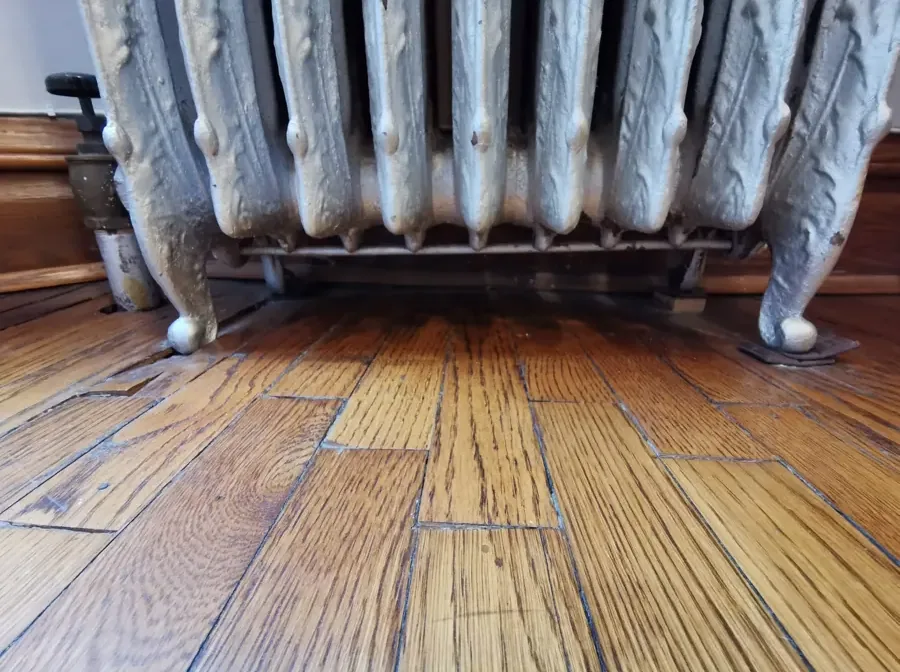
A changed wood floor needs more than a judgment about how its surface looks. Raised edges, gaps or darkened boards can accompany moisture within the flooring and the layer beneath it. Hardwood floor water damage restoration in Sherman Oaks starts by identifying the product and its attachment, then examining the water exposure before deciding whether drying can preserve the assembly.
First steps for hardwood floor water damage
- Remove the ongoing water source. Coordinate leak repair and safely clear accessible pooling so flooring is not repeatedly exposed during the construction and condition assessment.
- Document changes before sanding. Photograph raised edges, staining and affected transitions without attempting to flatten the surface while moisture may still be changing inside the boards.
- Keep wet coverings separated. Damp rugs and pads should be assessed and moved appropriately so they do not continue holding water against the wood or wet another room.
- Preserve product information. Available flooring specifications help identify board construction, attachment and refinishing limits before access or removal decisions.
How hardwood floor water damage progresses
- 1
Identify the assembly and exposure
The assessment records flooring construction, attachment and water condition, comparing affected areas with suitable dry references to document the initial material condition.
- 2
Select practical moisture access
The scope identifies whether boards can remain or selected sections need lifting, explaining how the chosen approach reaches the subfloor and other layers holding water underneath.
- 3
Track the retained floor response
Moisture readings and visible movement are considered together as drying proceeds, with adjustments made for trapped layers rather than judging progress solely by the board surface.
- 4
Prepare the flooring repair decision
The handoff records retained material condition and remaining damage so the flooring trade can plan replacement or refinishing after drying.
Identify the material before choosing the treatment
A floor in Chandler Estates may use a different product or installation method from one in Magnolia Woods. The assessment should identify whether the boards are solid or engineered, how they are attached and what supports them. Those findings affect access and the range of repairs available if the floor has swollen or separated.
At a property near Kester Avenue Elementary School, a useful inspection compares affected boards with appropriate dry sections and examines the subfloor where access permits. The goal is to understand the moisture relationship through the assembly rather than treating the most visibly raised board as the only damaged component.
- Document the original pattern of raised edges and discoloration before furniture movement or material removal changes the floor's appearance.
- Check transitions into adjoining rooms for moisture beneath rugs or coverings that may have slowed drying after the release.
- Identify adhesive, underlayment or other layers that can retain water and influence whether the boards can remain in place.
- Separate finish damage from structural deterioration so refinishing is considered only after the retained floor condition has been assessed.
Choose access that reaches the layer holding moisture
Drying the face of a board may not reach water trapped beneath it. The arrangement should account for the floor's construction and the water condition. Some sections may require lifting to expose the subfloor, while others can be monitored in place. The scope should explain why a selected access method suits the observed assembly.
Where the source originated beneath concrete, slab leak restoration connects the flooring assessment with source repair and moisture in the supporting slab. Closing over that layer too early can compromise the new covering.
Make sanding and replacement later material decisions
Sanding a still changing floor can remove wood before the moisture imbalance has resolved. Final repair planning should consider material stability, remaining damage and the product's refinishing limits. A dry board may still be unsuitable for retention if joints, layers or attachments have deteriorated.
The handoff should include the identified product, measured areas, source status and any exposed subfloor findings. It should also separate the technical repair decision from appearance matching across the room. This gives the flooring trade a useful basis for replacement or refinishing after the moisture work is complete.
Discuss the wet materials before repairs
Describe how the boards changed, what caused the water exposure and whether the flooring product is known. Those details help select the comparison points and access needed before sanding, replacement or another covering changes the assembly.
(888) 578-6508 Discuss the floor material decisionWhat does hardwood floor water damage cost in Sherman Oaks, CA?
Hardwood floor water damage restoration in Sherman Oaks depends on construction, trapped moisture and access beneath boards. These ranges describe assessment and drying scopes; replacement materials, sanding and finish matching should be separately identified.
Limited clean-water area
$1,200 to $2,000
- Focused board assessment
- Accessible moisture checks
- Limited floor exposure
Several affected floor sections
$2,000 to $3,400
- Multiple wet transitions
- Expanded subfloor inspection
- Broader drying arrangement
Dense or concealed moisture
$3,400 to $5,000
- Trapped lower layers
- Complex access decisions
- Detailed flooring handoff
The figures describe typical work scopes, not a quote. Water category, affected area, access and the time before drying change the scope. Compare the inputs in the water damage cost calculator.
Documentation for your insurance claim
The restoration contractor records the water source, affected rooms and moisture readings before removal begins. Timestamped photographs show damaged materials and the reason for opening a wall or lifting a floor. Daily temperature, humidity and material readings document progress against a dry comparison area. An itemized scope separates extraction, disposal, cleaning and equipment use from plumbing repairs and finish replacement. The property owner keeps invoices and the initial discovery details with that record. An insurer evaluates coverage under the actual policy; a sudden plumbing release, outside flooding and a sewer backup can receive different treatment. The adjuster decides coverage, and the homeowner checks deductibles, exclusions and any applicable endorsements directly with the insurer.
Daily measurements support the IICRC S500 drying goal. The drying crew compares similar materials and investigates readings that stop improving before equipment leaves.
Hardwood floor water damage in Sherman Oaks
Wood floor assessments cover Chandler Estates, Magnolia Woods and properties near Kester Avenue Elementary School, with flooring type, attachment method and the actual water exposure examined before a repair plan is developed.
The same service nearby: hardwood floor water damage in Valley Village, Encino, Studio City.
All water damage services in Sherman Oaks · View all service areas
Hardwood Floor Water Damage questions in Sherman Oaks, CA
Should raised board edges be sanded immediately?
Sanding should wait until the moisture condition and material stability have been assessed. Boards can continue changing as the assembly dries. Removing wood too early can create another surface problem later, so the flooring repair decision belongs after the retained layers and their condition are understood.
Can engineered and solid flooring be treated identically?
Their construction and refinishing limits can differ. Attachment and the supporting layer also influence access and drying options. The assessment should identify the actual product before recommending treatment, with any deterioration of joints or layers considered separately from the amount of moisture still present.
Why measure an unaffected part of the floor?
A suitable dry comparison helps interpret readings in the affected area when the materials are comparable. Consistent measurement locations also make changes easier to follow. The goal is to understand the assembly's response rather than relying on a single reading from the most visibly damaged board.
Does dark staining always mean the board must be replaced?
Appearance is one part of the condition assessment. The flooring product, water exposure and remaining damage all matter. A stain may need a finish repair, while damaged joints or deteriorated layers can require replacement even after drying. The scope should explain the specific material decision.
Can moisture remain under boards that feel dry?
Yes. The face can improve while the subfloor, adhesive or underlayment still holds water. Appropriate access and measurements are needed to assess those layers. The drying method should reach the moisture reservoir rather than assuming surface airflow alone treats the complete floor assembly.
What should the flooring installer know before repairs?
The installer needs the identified product, source repair status, measured areas and condition of the supporting layers. Remaining material damage and access openings should also be documented. This helps distinguish readiness for installation from separate decisions about matching board appearance or refinishing the room.
A clear scope starts with the source
Describe how the boards changed, what caused the water exposure and whether the flooring product is known. Those details help select the comparison points and access needed before sanding, replacement or another covering changes the assembly.
(888) 578-6508 Discuss the floor material decisionLet the assembly determine the repair
A useful assessment connects the visible boards with the moisture and condition of every retained layer beneath them.
(888) 578-6508 Arrange a wood floor moisture assessment