Slab Leak Water Damage in Hollywood
A damp floor can be the first visible sign of water beneath a finish. Hollywood slab leak cleanup follows the moisture through concrete, floor coverings and adjoining walls before repairs close the area.
(888) 578-6508 Discuss moisture below the flooring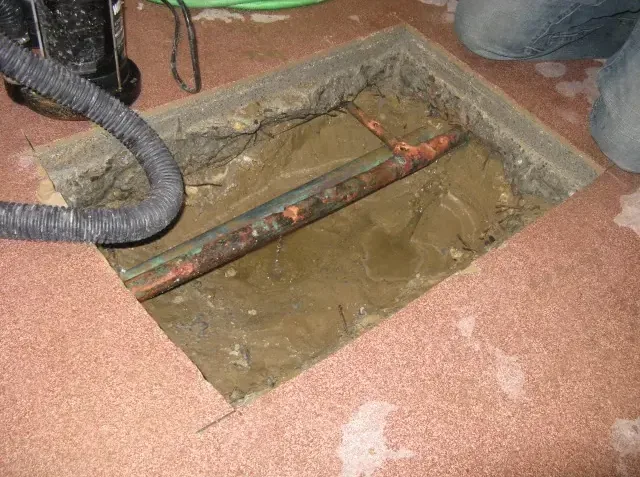
A stain at the base of a wall may seem separate from a damp patch across the floor. Both can belong to the same concealed water path. Before cutting into a finish, the assessment maps the affected surface and checks nearby materials. That record gives the owner a clearer basis for coordinating plumbing investigation with the work needed to dry the building.
First steps for slab leak water damage
- Limit further supply. If the leak is active, arrange a safe supply shutoff and plumbing assessment. Keep clear of wet electrical connections while the source is being controlled.
- Mark visible floor changes. Photograph lifting edges, damp joints and wall base staining so the initial condition remains clear after furniture moves and access work starts.
- Gather construction details. Share available flooring information and any previous repair opening locations with the assessor, without removing intact finishes before the wet area is mapped.
- Coordinate the repair opening. The plumber and restoration scope should account for access, debris removal and the surrounding materials that need drying after pipe repair.
How slab leak water damage progresses
- 1
Map the affected floor assembly
The inspection compares visible damage with moisture readings across floor finishes, transitions and wall bases to trace where the water has traveled beneath the surface.
- 2
Connect source repair and access
Pipe investigation and repair access are coordinated with selective material removal, protecting usable surrounding finishes while exposing the layers that require attention after the leak.
- 3
Manage moisture in retained layers
Extraction and drying methods are selected for the actual concrete and finish system, with equipment positioned to support evaporation from materials that remain in place.
- 4
Record readiness for floor repairs
Follow up measurements describe the condition of the substrate and adjoining assemblies so replacement flooring, patching and trim work can proceed in an informed sequence.
Separate the leaking pipe from its damage
The pipe repair stops the release. Restoration addresses moisture already held in the concrete, adhesive, underlayment and adjoining finishes. Those tasks need coordination because a repair opening can provide useful access, but it may cover only a small part of the wet area. A floor that feels dry around the opening can still contain moisture farther beneath an intact finish.
In Spaulding Square, historic preservation planning can be relevant when work affects protected details. For an interior in Thai Town or Franklin Village, the useful starting information is the actual floor construction and the first visible change. The assessment records those conditions before deciding which materials can stay and which openings are necessary to reach the wet assembly.
- Darkened floor joints can help locate an affected area but need measurements before the wet boundary is mapped.
- Loose adhesive or lifting flooring may require access beneath the finish to assess the condition of the substrate.
- Baseboard swelling can point toward moisture at the wall junction even when the wall paint still looks intact.
- Furniture and stored items should be moved through dry routes so the floor inspection can reach concealed corners.
Give trapped moisture a suitable path out
Concrete and the materials covering it do not necessarily dry together. An impermeable finish can restrict evaporation from the layer underneath. Selective removal may therefore be needed to create access for drying and testing. The scope should state which coverings are being retained, what has been opened and how the exposed substrate will be checked before replacement flooring is considered.
- Keep the plumbing repair record with photographs of the opening and the surrounding affected floor before closure.
- Identify transitions between different floor coverings because each assembly may need a different approach to moisture assessment.
- Protect intact finishes beside the work area while debris and wet materials are carried from the building.
- Use suitable material readings to assess progress rather than treating the disappearance of a stain as completion.
Plan the handoff to replacement finishes
The structural drying stage can include the concrete and nearby wall materials after the source is controlled. Flooring installation should follow the requirements of the selected product and substrate. A documented drying record gives the owner and flooring installer useful information before adhesive, underlayment or a new covering closes the surface again.
Any remaining plumbing, concrete patching and finish work should be listed separately. That helps the property owner schedule the repair sequence without concealing moisture under a completed looking floor.
Discuss the wet materials before repairs
A damp finish can hide a wider floor assembly needing attention. Describe the changes in the floor and any active supply problem so an assessment can connect source repair access with material drying.
(888) 578-6508 Arrange a concealed moisture assessmentWhat does slab leak water damage cost in Hollywood, CA?
Slab leak damage costs in Hollywood reflect the area beneath the finish, access needs and the number of affected layers. These restoration ranges support planning; pipe location, plumbing repair and replacement flooring need clearly identified scopes.
Limited floor opening
$1,500 to $2,700
- Focused substrate access
- Localized wet edges
- Targeted drying setup
Several affected layers
$2,700 to $4,300
- Floor covering removal
- Adjoining wall checks
- Broader material drying
Extensive trapped moisture
$4,300 to $6,000
- Multiple affected assemblies
- Restricted evaporation paths
- Expanded progress monitoring
The figures describe typical work scopes, not a quote. Water category, affected area, access and the time before drying change the scope. Compare the inputs in the water damage cost calculator.
Documentation for your insurance claim
The restoration contractor records the water source, affected rooms and moisture readings before removal begins. Timestamped photographs show damaged materials and the reason for opening a wall or lifting a floor. Daily temperature, humidity and material readings document progress against a dry comparison area. An itemized scope separates extraction, disposal, cleaning and equipment use from plumbing repairs and finish replacement. The property owner keeps invoices and the initial discovery details with that record. An insurer evaluates coverage under the actual policy; a sudden plumbing release, outside flooding and a sewer backup can receive different treatment. The adjuster decides coverage, and the homeowner checks deductibles, exclusions and any applicable endorsements directly with the insurer.
Daily measurements support the IICRC S500 drying goal. The drying crew compares similar materials and investigates readings that stop improving before equipment leaves.
Slab leak water damage in Hollywood
Hollywood floor moisture assessments can be arranged around Thai Town, Spaulding Square and Franklin Village, with the affected construction and access requirements discussed before intrusive work begins.
The same service nearby: slab leak water damage in Valley Village, Studio City, North Hollywood.
All water damage services in Hollywood · View all service areas
Slab Leak Water Damage questions in Hollywood, CA
Does a warm floor prove there is a slab leak?
A change in floor temperature can be useful information, but source diagnosis requires an assessment. Other observations, moisture measurements and plumbing investigation help explain what is happening. The restoration scope follows the materials actually affected once the water source and wet area have been identified.
Will the whole floor need to be removed?
Removal depends on the wet boundary, floor construction and condition of each layer. Some finishes can remain while other sections need access underneath. The assessment should explain the reason for each proposed opening and how retained material will be measured during the drying stage.
Is pipe repair part of concrete drying?
They are different tasks. Plumbing work controls the release, while drying addresses water already in the building materials. Coordinating them helps avoid closing a repair opening too early and allows the owner to understand which parts of the overall project each contractor is handling.
Why does concrete need checks after it looks dry?
The exposed surface can change appearance before moisture deeper in the slab has reduced sufficiently. Floor coverings and adhesives have their own installation requirements. Suitable testing helps determine the substrate condition before a new finish restricts evaporation from the area that was wet.
Can furniture stay beside the affected floor?
Furniture may remain in an unaffected space if it does not block access or equipment airflow. Items over damp flooring should be assessed and relocated safely. The work area also needs room for inspection, material handling and any plumbing opening required to reach the source.
What belongs in the final damage documentation?
Useful records include the initial floor condition, the mapped wet area, pipe repair information and photographs of exposed layers. Material removal decisions and drying measurements should accompany the scope. Together, these records explain the progression from the concealed leak to the remaining finish repairs.
A clear scope starts with the source
A damp finish can hide a wider floor assembly needing attention. Describe the changes in the floor and any active supply problem so an assessment can connect source repair access with material drying.
(888) 578-6508 Arrange a concealed moisture assessmentUnderstand what lies beneath the wet finish
A clear scope identifies affected layers, planned openings and the checks needed before concrete and flooring repairs close the area.
(888) 578-6508 Discuss the affected slab assembly