Structural Drying in Hollywood
A room can look dry while its materials still hold water. Hollywood structural drying uses measured conditions to select equipment, plan access and track the assemblies that need attention before finishes return.
(888) 578-6508 Discuss the retained material moisture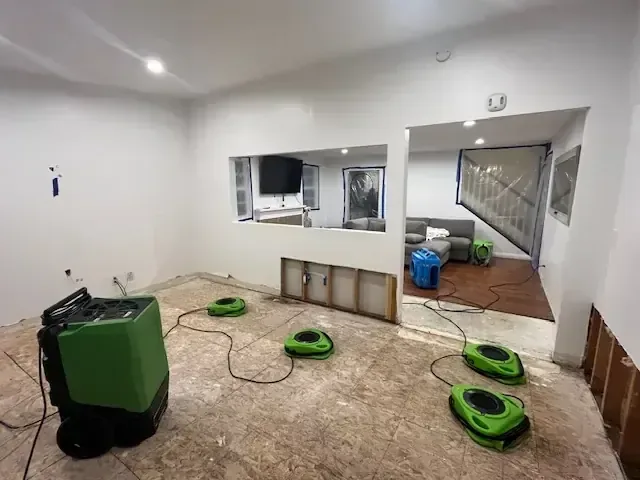
The sound of drying equipment is not a measure of progress. The useful question is how the wet materials are responding. A wall base, concrete surface and wood floor can release moisture differently, especially when coverings restrict evaporation. A drying plan therefore starts with the affected assemblies and uses readings to decide where air movement, humidity control or additional access will help.
First steps for structural drying
- Keep the setup accessible. Leave equipment airflow paths unobstructed and discuss access needs with the crew before moving devices or closing the work area.
- Report fresh water promptly. New dripping or spreading dampness can indicate continued entry. Share the change so source repair and drying adjustments can be coordinated before materials are concealed.
- Preserve the measurement locations. Avoid covering surfaces or reinstalling trim during monitoring, so follow up readings can reach the same relevant material areas.
- Discuss planned finish work. Tell the assessor about scheduled flooring or patching so moisture documentation can support an appropriate handoff to the repair contractor.
How structural drying progresses
- 1
Set material specific starting conditions
The assessment maps wet assemblies and compares reference areas, recording retained layers and the measurement locations to be tracked throughout drying.
- 2
Arrange airflow and humidity management
Equipment placement supports evaporation from accessible materials while controlling room humidity, with attention to safe passage, electrical arrangements and the actual exposure of the wet structural layers.
- 3
Compare readings and adjust the approach
Repeat measurements show the response of each assembly, allowing the setup or access plan to change when a concealed section remains damp or an exposed surface progresses differently.
- 4
Document the condition before reconstruction
The completion record describes retained material readings, equipment changes and remaining repair needs, giving the owner a clear basis for coordinating closure and installation of replacement finishes.
Check what is still wet after removal
The Cahuenga Boulevard water main break on January 27, 2022 flooded streets and garages. After a garage flood is extracted, wall edges and stored material contact areas can still need assessment. The same distinction between visible water and retained moisture applies to a private interior leak: collecting the liquid makes the space accessible, but measurements define the next stage.
For a Franklin Village property, the owner can identify rooms that need to remain usable while equipment operates. In Yucca Corridor, a manager may coordinate access to connected spaces so readings follow the entire wet boundary. The setup should respect those practical needs while maintaining the air paths and material access required by the affected structure.
- Readings from a suitable dry reference help place affected material measurements in the context of the actual building.
- Floor coverings or trim can restrict evaporation and may require selective access before the underlying assembly responds.
- Equipment discharge should reach the intended wet surfaces without blocking a safe passage through occupied areas.
- Material checks should continue at the same relevant locations so changing conditions can be compared meaningfully over time.
Change the setup when the assembly needs it
Air movers encourage evaporation at exposed surfaces while dehumidification manages moisture in the surrounding air. Neither replaces access to a trapped wet layer. If measurements show slow progress in a cavity or beneath a finish, the plan may need a different airflow route or selective opening. Those changes should be explained in relation to the material that remains wet.
- Keep equipment operating as arranged and discuss any interruption needed for access or building use with the crew.
- Record source repairs so the drying assessment can distinguish retained moisture from water still entering the assembly.
- Separate removed materials from retained components when documenting the scope and the repairs that will follow.
- Use the material condition to determine the repair handoff rather than selecting a fixed completion date in advance.
Close the job with a usable moisture record
Following water extraction, a documented drying sequence can show where readings began, how equipment changed and what condition the retained structure reached. The owner and repair contractor can then plan patching, flooring installation or trim replacement with the moisture information relevant to those materials, rather than relying on the appearance of a clean room.
The record should also identify any remaining source issue or inaccessible section. Resolving those items keeps the repair sequence connected to the real condition of the building assembly.
Discuss the wet materials before repairs
A quiet stain or clean floor can still conceal moisture. Describe the materials affected and any completed source repair so the drying assessment can plan access, equipment needs and useful measurement locations.
(888) 578-6508 Assess the remaining structural moistureWhat does structural drying cost in Hollywood, CA?
Structural drying in Hollywood is scoped around wet assemblies, access restrictions and monitoring needs. These ranges describe increasing material complexity, with extraction, removal and reconstruction clearly identified where they form separate parts of the project.
Limited exposed materials
$1,000 to $1,800
- Accessible wet surfaces
- Focused airflow setup
- Material reading record
Several wet assemblies
$1,800 to $3,400
- Different material layers
- Expanded equipment placement
- Multiple monitoring locations
Dense or concealed moisture
$3,400 to $5,000
- Restricted evaporation paths
- Selective access coordination
- Detailed progress tracking
The figures describe typical work scopes, not a quote. Water category, affected area, access and the time before drying change the scope. Compare the inputs in the water damage cost calculator.
Documentation for your insurance claim
The restoration contractor records the water source, affected rooms and moisture readings before removal begins. Timestamped photographs show damaged materials and the reason for opening a wall or lifting a floor. Daily temperature, humidity and material readings document progress against a dry comparison area. An itemized scope separates extraction, disposal, cleaning and equipment use from plumbing repairs and finish replacement. The property owner keeps invoices and the initial discovery details with that record. An insurer evaluates coverage under the actual policy; a sudden plumbing release, outside flooding and a sewer backup can receive different treatment. The adjuster decides coverage, and the homeowner checks deductibles, exclusions and any applicable endorsements directly with the insurer.
Daily measurements support the IICRC S500 drying goal. The drying crew compares similar materials and investigates readings that stop improving before equipment leaves.
Structural drying in Hollywood
Drying assessments cover Hollywood properties around Cahuenga Boulevard, Franklin Village and Yucca Corridor, with equipment placement based on the wet assemblies and the rooms that must remain accessible.
The same service nearby: structural drying in Valley Village, Studio City, North Hollywood.
All water damage services in Hollywood · View all service areas
Structural Drying questions in Hollywood, CA
Why does a dry looking wall still need equipment?
The painted surface can lose visible dampness before the wall assembly has reached suitable moisture conditions. Measurements at the affected layers help determine whether drying is still needed. Equipment decisions should follow those readings and the construction, rather than the color or feel of the surface alone.
Can a drying completion date be promised at the start?
The response depends on the materials, access, original moisture and whether the source is controlled. Progress measurements are used to adjust the plan and determine readiness for repairs. A responsible scope explains those variables and follows the actual assembly instead of assuming every loss dries alike.
Do air movers and dehumidifiers perform the same job?
Air movement supports evaporation at wet surfaces, while dehumidification removes moisture from the surrounding air. Their arrangement needs to suit the room and exposed materials. Concealed damp layers may also require access, because equipment operating outside an intact finish cannot automatically reach every wet section beneath it.
Can equipment be moved to make the room quieter?
Changes to placement or operation can affect the intended airflow and moisture control. Discuss room use and access needs with the crew before moving equipment or switching it off. The arrangement can then be adjusted deliberately while keeping the affected materials and monitoring plan in view.
What happens if a material is not responding?
The readings prompt a closer look at access, continued water entry and the construction of that section. The plan may need an airflow change or selective removal of an obstructing layer. Any adjustment should be documented so the owner understands why the scope or equipment arrangement changed.
What should the flooring installer receive after drying?
The installer benefits from the affected area record, material readings and information about removed layers or remaining repairs. Product installation requirements still apply to the substrate and chosen finish. Connecting those requirements with the drying documentation supports the decision about when replacement flooring can be installed.
A clear scope starts with the source
A quiet stain or clean floor can still conceal moisture. Describe the materials affected and any completed source repair so the drying assessment can plan access, equipment needs and useful measurement locations.
(888) 578-6508 Assess the remaining structural moistureUse measurements to plan the repair handoff
The drying record connects equipment work to retained wall and floor conditions before replacement finishes return.
(888) 578-6508 Discuss the material drying record